
Clamp-force spreading & surface protection | ID/OD/thickness made to drawing | OEM/ODM
Custom flat washers in AISI 304, 316 and 65Mn, made to drawing with controlled ID, OD, thickness and flatness for load distribution, surface protection and special mounting holes. Stamped production and OEM/ODM support.
Stamping parts manufacturer
Owned factory
Stamping capacity · 120 presses up to 450 T
Quotation response
|
|
|||||||||||||||||||||||||||||||||||||||||||||||||||||||||||||||||||||||||||||||
|
||||||||||||||||||||||||||||||||||||||||||||||||||||||||||||||||||||||||||||||||
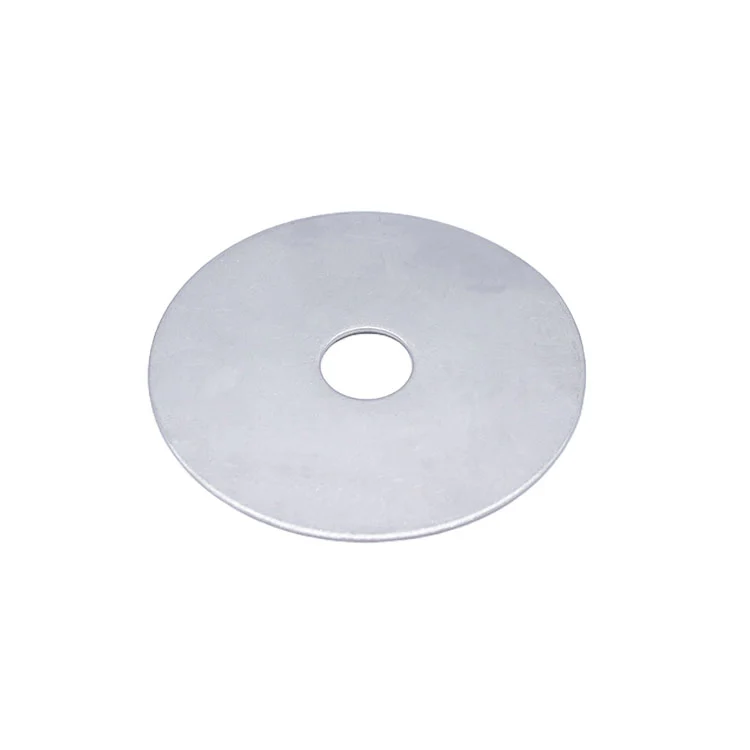
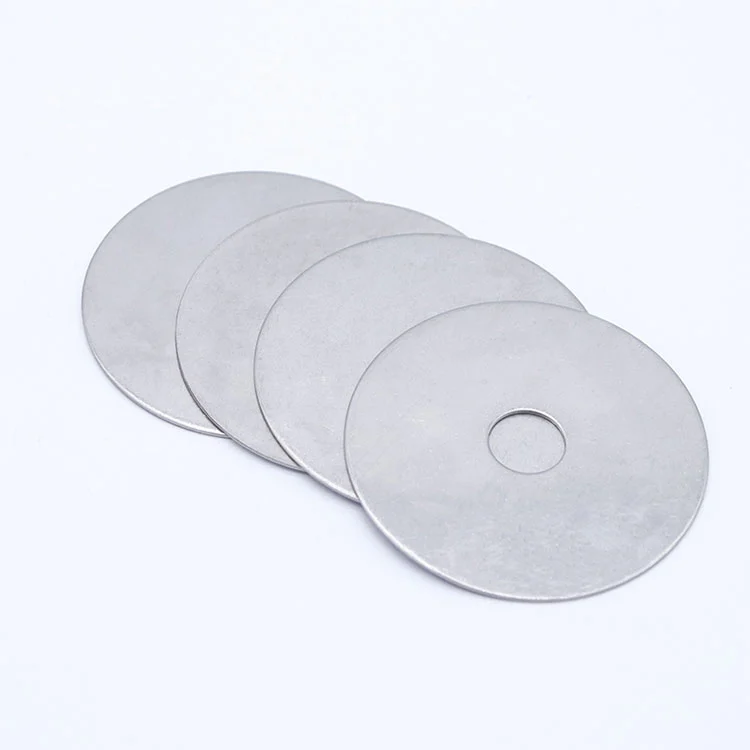
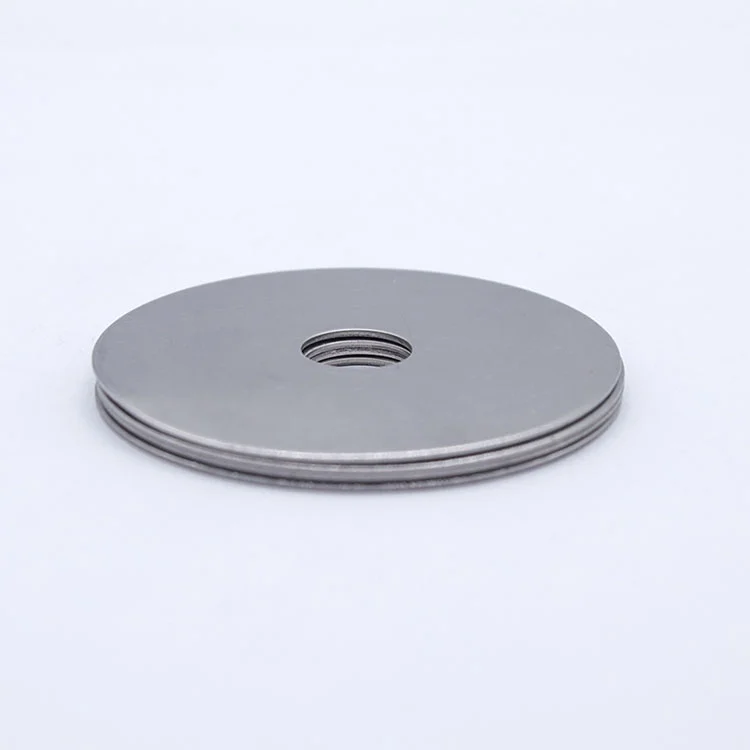
Custom flat washers are circular plain sheet components with a central mounting hole: they distribute the bolt clamping force, protect the mating surface and reduce friction, while insulating contact surfaces and compensating minor assembly gaps. Besides standard sizes, inner/outer diameter, thickness, material and finish can be customized to the drawing for special assembly and space requirements.
Flat washers may seem simple, but their dimensions directly affect how fastening loads are transferred to the connected components.
The inner diameter must provide sufficient clearance around the fastener, while the outer diameter determines the load distribution. Thickness affects the washer's stiffness and its ability to remain flat under applied load.
components with limited load-bearing area. For these applications, standard DIN washers may not provide the required combination of hole clearance, load-bearing area, and thickness. Custom washers can be sized to fit the specific assembly requirements.
Ningbo Yinzhou Zhenhua can produce custom stamped flat washers in AISI 304, AISI 316, and 65Mn materials according to customer drawings, samples, or approved specifications.
For a custom flat washer, ID, OD and thickness should be considered as a set.
| Dimension | Engineering purpose |
| Inner Diameter (ID) | Provides clearance around the bolt or screw and determines whether the washer seats correctly around the fastener |
| Outer Diameter (OD) | Defines the bearing footprint and affects how widely the clamp load is distributed |
| Thickness (T) | Influences stiffness, resistance to bending and the available bearing section |
| ID / OD relationship | Determines the usable bearing area around the fastener |
| Flatness | Important where the washer must seat evenly against the mating surface |
| Edge condition | Burrs or excessive sharp edges may interfere with assembly or damage coatings |
For example, increasing the outer diameter can provide a larger bearing area without changing the bolt size. This is useful when the joined material is thin or relatively soft.
However, a larger washer is not automatically a better washer. The OD must remain compatible with surrounding components, countersinks, housings and available mounting space.
|
||||||||||||
|
A bolt or nut applies its clamping force through a relatively small contact area. The washer increases this bearing area so the load is transferred into the workpiece over a wider surface.
This helps reduce local indentation and deformation, particularly on softer or thinner substrates.
The washer creates a controlled metal-to-metal interface between the fastener and workpiece. It can help prevent the bolt head or nut from directly damaging painted, plated or machined surfaces during tightening.
A custom washer can be designed with an ID and OD suited to an oversized hole, special slot arrangement or application-specific mounting geometry.
In precision assemblies, the washer can also provide a consistent contact surface between the fastener and component rather than relying on the geometry of the bolt head or nut alone.
Important: a plain flat washer does not provide spring preload or dedicated anti-rotation locking. If the joint requires resistance to bolt rotation under vibration, the washer type should be selected accordingly.
Not every custom flat washer needs to be a simple DIN-style disc.
Depending on the drawing, the stamped component can be developed with:
For production parts, the geometry should be defined by the customer's approved drawing rather than inferred from the nominal bolt size.
If the washer is being used against soft material or thin sheet, provide the substrate material and thickness when requesting a quotation.
The washer should be selected according to the bearing condition of the joint, not simply the thread size.
general-purpose stainless steel with balanced corrosion resistance for industrial equipment, outdoor structures and conventional machinery.
molybdenum-bearing stainless steel with improved resistance to chlorides and acids for marine, chemical and frequent-washdown environments.
spring-steel grade with good elasticity and fatigue resistance for joints under higher loads and repeated vibration.
Flat washers are often considered inexpensive parts, but mass production quickly exposes dimensional issues.
Ningbo Yinzhou Zhenhua uses stamping and progressive die manufacturing processes for repetitive production, incorporating die design and maintenance into the manufacturing process.
The company operates according to the IATF 16949 quality management system, providing a documented process control framework for repetitive production.
Custom flat washers are particularly useful when standard catalog washers do not match the actual joint geometry.
Special dimensions can be matched to stamped brackets, chassis components and compact assemblies.
Custom OD and thickness can help accommodate terminals, housings and sheet-metal mounting points.
Used to distribute clamp load between fasteners and machined or fabricated components.
Suitable where coated sheet metal or relatively thin materials need additional bearing area.
Useful for oversized holes, non-standard fastener dimensions and application-specific mounting requirements.
For custom flat washers, the main purchasing risk is usually not whether a factory can stamp a round disc. It is whether the supplier can hold the specified dimensions consistently after tooling and production are scaled up.
Ningbo Yinzhou Zhenhua has several concrete manufacturing factors relevant to this type of order:
The company has more than three decades of experience in stamping parts and fastening components.
Tooling design and maintenance are handled within the manufacturing system, which is important when a custom washer requires repeated dimensional adjustment during development.
Provides a documented framework for process control and batch consistency.
Custom ID, OD, thickness, material and finish can be developed from customer drawings or physical samples rather than being limited to catalog sizes.
The manufacturing process is structured for both development samples and subsequent batch production, allowing an approved design to be carried into recurring orders.
Not necessarily. A larger OD increases the bearing area, but it must remain compatible with the available mounting space and the mechanical design of the joint. The correct OD is the largest practical bearing footprint required by the application.
No. The washer normally requires clearance around the fastener. The appropriate ID depends on the bolt standard, tolerance, installation method and application.
A custom washer is useful when the standard washer does not provide the required ID, OD, thickness, bearing area, material or surface treatment. It is particularly useful for special mounting holes and thin or soft substrates.
A plain flat washer is not primarily an anti-loosening component. Its main purpose is load distribution and surface protection. For vibration-induced rotation, a dedicated locking solution should be evaluated.
Yes. 65Mn can be used where higher mechanical strength or resistance to deformation is required. The surface treatment should be selected according to the corrosion environment.
Tolerance should be established from the customer's drawing and application requirements. Critical dimensions such as ID, OD, thickness and flatness can be identified separately during drawing review.
Yes. A physical sample can be used as the basis for drawing development, dimensional confirmation and tooling design when the original technical drawing is unavailable.
send your size, quantity and drawing for countersunk lock washers, and we will reply after confirming specifications and lead time.
✅ Get free sample!! Contact us today
✅ We will contact you within 24 hours
