Material
Spring steel 65Mn
- Hardness
- HRC 40-48
- Surface Treatment
- Black oxide / phosphate / Dacromet / zinc plating
- Notes
- Most common; balances spring and bite

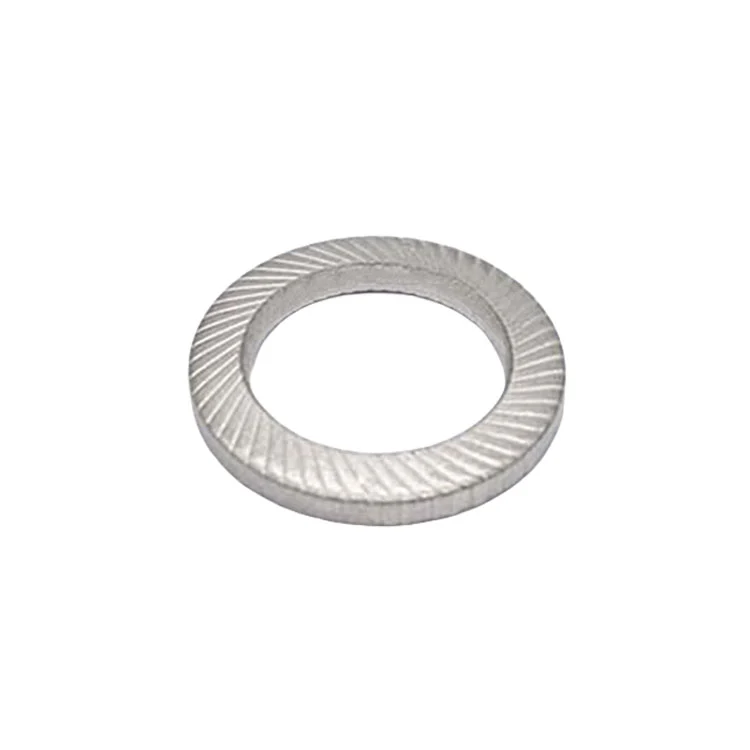
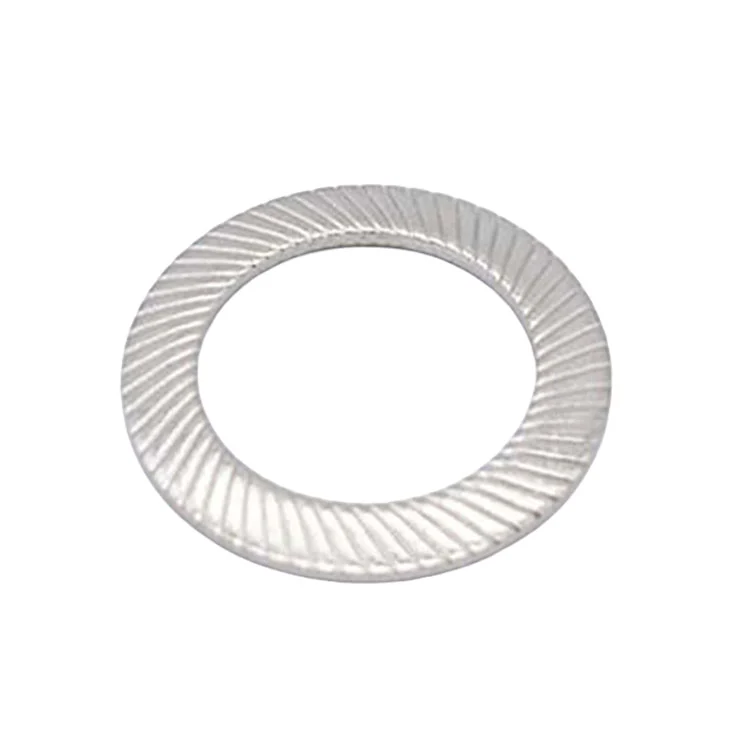
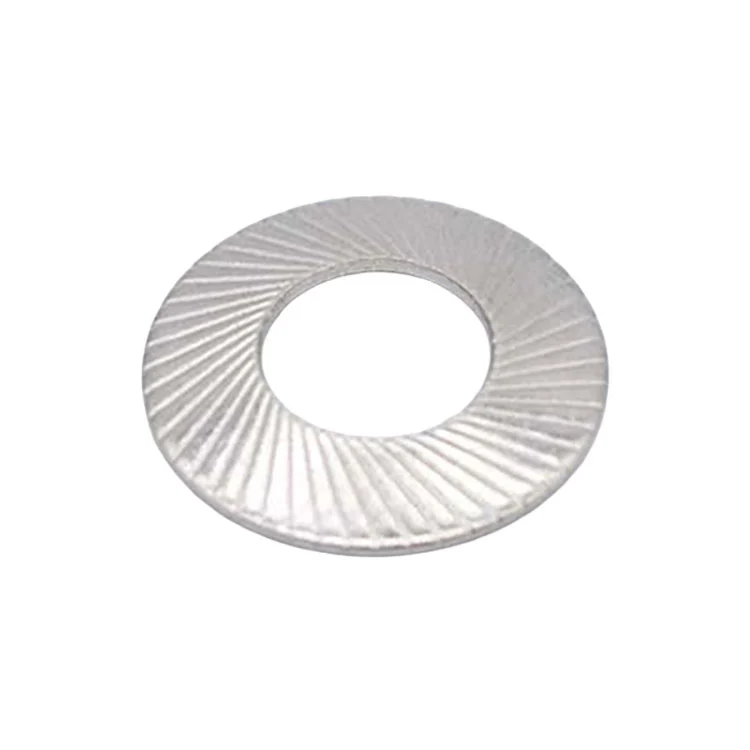
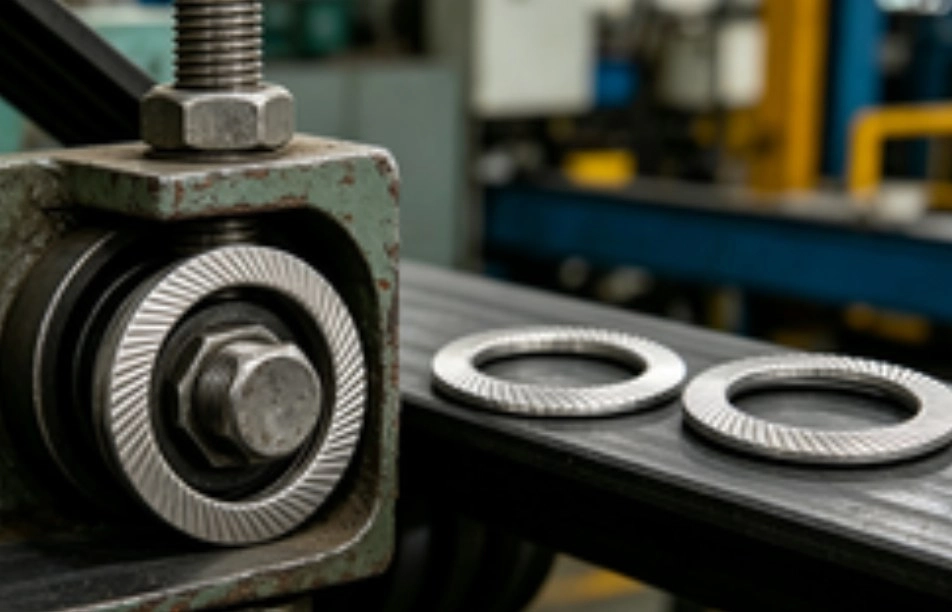
Safety lock washers (DIN 9250) , also called conical serrated washers, are a single-piece part: a flat washer is formed in one press operation into a shallow cone (dished) shape and given radial serrations at the bore or on the outer edge. Zhenhua backs the range with in-house tooling and 30–400 t pressing under IATF 16949 , supplying automotive Tier-2/Tier-3 chains and export programs worldwide.
Safety lock washers (DIN 9250), also called conical serrated washers, are a single-piece part: a flat washer is formed in one press operation into a shallow cone (dished) shape and given radial serrations at the bore or on the outer edge.
The positioning is precise: it delivers both the anti-rotation bite of a tooth washer and the sustained preload of a spring washer, yet is far simpler and cheaper than a paired wedge washer (DIN 25201) and needs no orientation during assembly. That makes it a strong fit for high-volume assembly lines, small threads, thin sheet and softer materials.
The S / VS / L series under DIN 9250 are what buyers must distinguish:
| Series | Cone height (approx.) | Character | Typical use |
|---|---|---|---|
| S | Low (approx. 0.8-1.2 mm) | Small axial compliance, stiffer | Rigid joints, metal-to-metal, tight envelope |
| VS | Medium | Balance of compliance and locking | The most general series; machinery and electrical |
| L | High (approx. 1.5-2.5 mm) | Long elastic travel, strong compensation | Soft materials, thin sheet, large thermal differential |
Important: S / VS / L must never be mixed. Using different cone heights in one joint produces inconsistent preload across the bolts, uneven load distribution and possible early failure of individual fasteners.
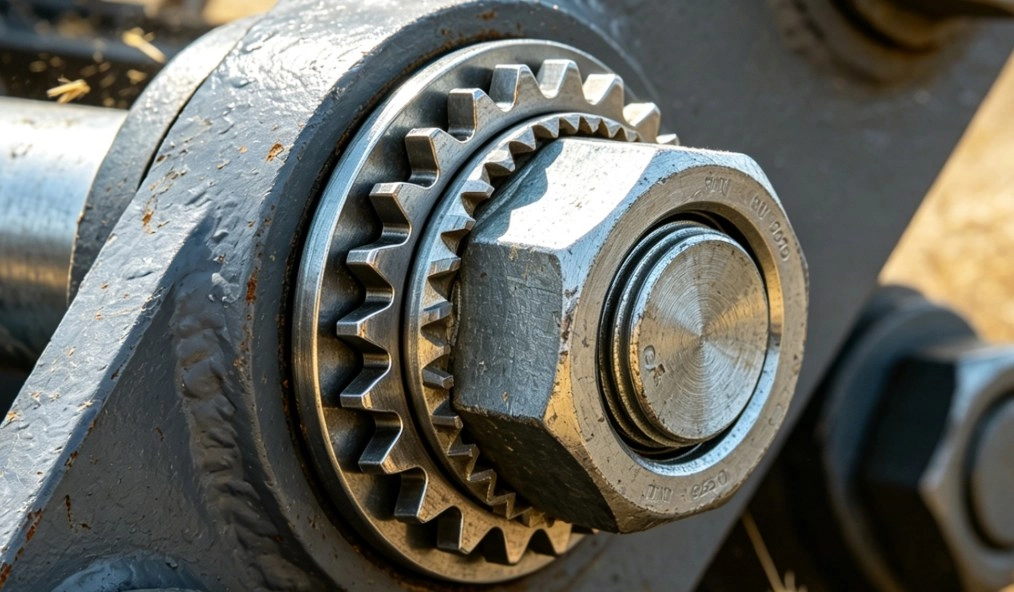
A safety lock washer locks through two independent paths - and this is what separates it from other washers:
Path one - the teeth bite. Radial serrations at the bore press into the bolt head or nut bearing face and into the mating part during tightening, creating anti-rotation resistance. This function matches a tooth lock washer and eliminates the rotational degree of freedom.
Path two - the cone stores elastic energy. This is the real distinction. The washer is conical in the free state; during tightening the cone is flattened, putting the material into elastic deformation and storing energy. Any subsequent micro-settlement from vibration, or dimensional change from thermal cycling, is compensated as the cone releases that stored energy, keeping bolt tension inside the effective range.
Why the combination matters. A plain tooth washer (DIN 6797) loses its springback once flattened, so any micro-settlement of the joint bleeds preload directly. A plain spring washer (DIN 127) has no teeth, so it resists rotation poorly. The safety lock washer solves both anti-rotation and preload retention, striking a good balance between piece cost and ease of assembly.
Versus the paired wedge washer. A wedge washer locks geometrically and has the highest locking grade, but must be paired, is orientation-sensitive and costs more. A safety lock washer is single-piece, orientation-free and cheaper, suiting high-volume assembly. Heavy-duty or safety-critical: choose wedge. General duty or high volume: choose safety. That is our standard recommendation.
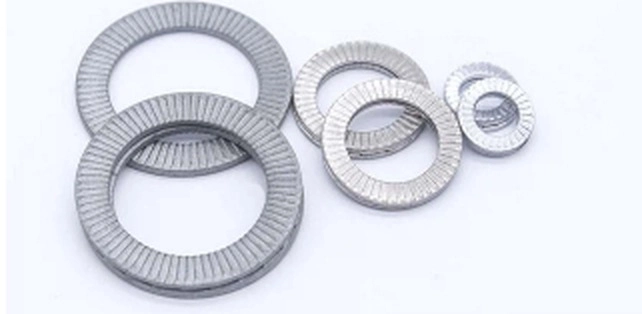
Serration layouts:
| Serration type | Description | Typical use |
|---|---|---|
| Internal teeth | Teeth at the bore, biting the bolt head or nut bearing face | Most common; flange and hex head bolts |
| External teeth | Teeth on the outer edge, biting the mating part | Soft materials; protects the area around the threaded hole |
| Internal + external | Teeth on both edges for two-way bite | High vibration; maximum anti-rotation |
| Sealing combination | Washer combined with a rubber/EPDM seal | Locking plus face sealing |
Common sizes: based on nominal thread from M2.5 to M20, with small sizes (M3-M10) being the densest application band. ID, OD, thickness and cone height are per DIN 9250 or customer drawing.
Inch and special sizes: UNC/UNF series, non-standard ID/OD (for example to match a flange face) and enlarged OD (to spread bearing area) can all be built to drawing.
Order confirmation checklist: (1) series (S / VS / L); (2) serration type (internal / external / both); (3) whether the ID needs size grading to the bolt tolerance; (4) surface treatment; (5) a single production batch per order - cone height consistency drives preload consistency.
*All measurements in millimeters (mm)*
| SIZE | d1 | d2 | s | h | Kgs/1000pcs | For screws of | ||
|---|---|---|---|---|---|---|---|---|
| min | max | mm | inch | |||||
| S 1.6 | 1.7 | 3.2 | 0.35 | 0.38 | 0.60 | 0.013 | 1.6 | — |
| S 2 | 2.2 | 4 | 0.35 | 0.39 | 0.60 | 0.021 | 2 | — |
| S 2.5 | 2.7 | 4.8 | 0.45 | 0.49 | 0.90 | 0.039 | 2.5 | — |
| S 3 | 3.2 | 5.5 | 0.45 | 0.51 | 0.90 | 0.049 | 3 | 3/8" |
| S 3.5 | 3.7 | 6 | 0.45 | 0.52 | 0.90 | 0.055 | 3.5 | — |
| S 4 | 4.3 | 7 | 0.5 | 0.59 | 1.00 | 0.085 | 4 | 5/32" |
Safety lock washers demand both elasticity and hardenability: the cone must spring back after being flattened, and the teeth must be hard enough to bite.
Surface treatment notes:
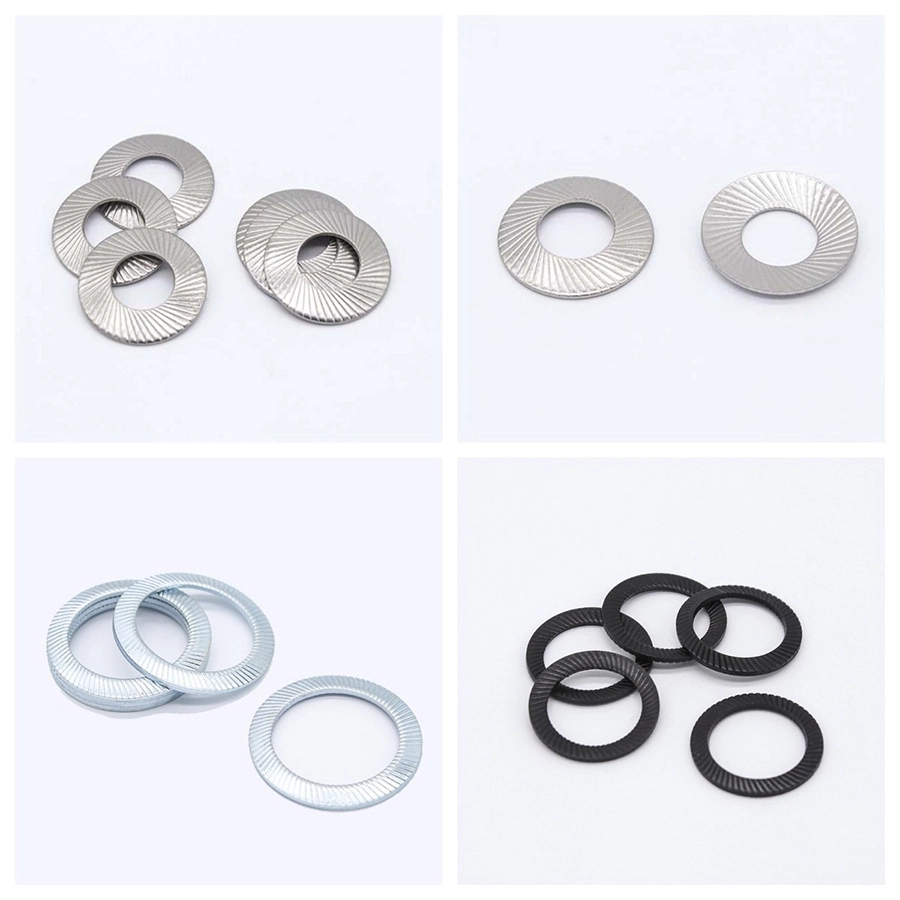
- Dacromet / zinc-aluminium flake: best corrosion protection with no hydrogen embrittlement risk - the preferred coating for hardened safety washers. A thin film (6-10 um) does not meaningfully reduce tooth bite.
- Black oxide / phosphate: thinnest film (1-3 um) and least effect on tooth geometry; moderate corrosion resistance, suitable indoors or where oil is present.
- Zinc plating: low cost, good appearance, but hardened parts must be de-embrittled. Safety washers live under sustained tensile stress, so delayed fracture from hydrogen embrittlement is a real risk - which is why we insist on de-embrittlement for hardened parts.
- Hot-dip galvanizing is not recommended: a thick zinc layer fills the serration valleys, reducing bite depth and sharply weakening locking performance.
What our inspection focuses on:
- Cone height and its consistency - the single most important dimension on this part. It sets elastic travel and springback force, and wide scatter within a batch directly causes inconsistent installed preload. We sample cone height batch by batch and record the distribution.
- Serration integrity - consistent tooth height, no chipped tips or burrs; a missing tooth creates a blind spot in the bite.
- Hardness - must satisfy both "teeth can bite" and "cone can spring back"; too hard is brittle, too soft flattens the teeth.
- No pre-flattening - finished parts must stay conical. If they are flattened in packing or transit (for example by stacked weight), the elasticity is already spent and they will not spring back after assembly.
Common failure modes:
- Flattened without springback - usually material too hard, embrittlement after heat treatment, or parts crushed in transit.
- Teeth collapsed - insufficient hardness, or tightening torque far above design value.
- Inconsistent preload - wide cone height scatter in the batch, or S / VS / L mixed on the line.
- Delayed fracture - hardened parts plated without de-embrittlement, failing hours to days after assembly under sustained tensile load. This is the most dangerous and most easily overlooked failure.
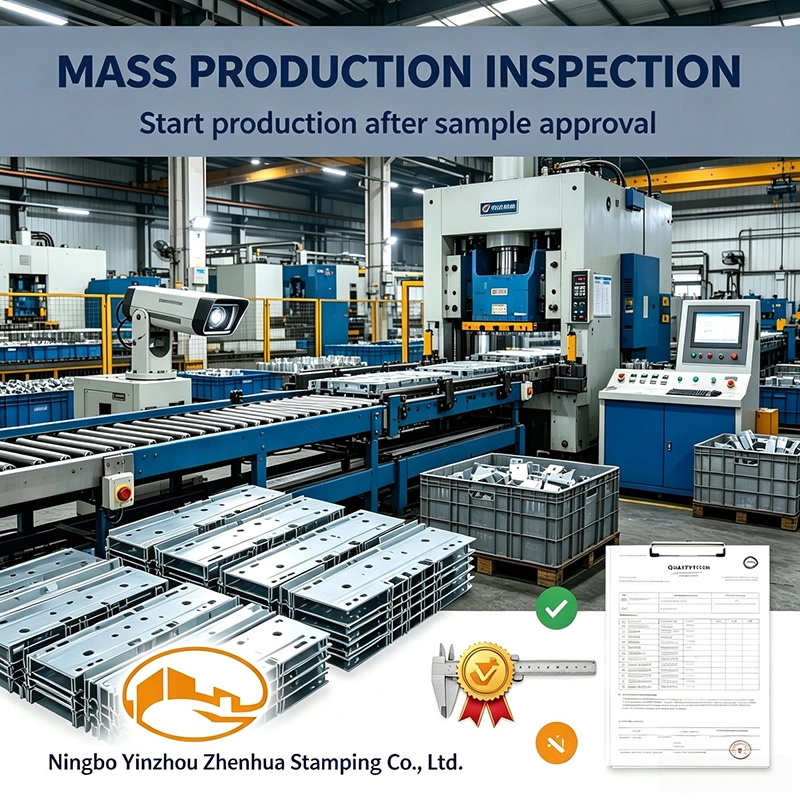
Process quality control - six gates
Incoming material verification: every coil is checked on the element analyzer for composition, with thickness, spec and batch documents confirmed; customers can trace any batch number.
First-article inspection: key dimensions, tooth/clip geometry and appearance are checked after every setup before continuous production is released.
In-process patrol: bin-change checks plus a patrol round every 2-3 hours; any abnormality stops the press and quarantines the current and previous batches.
Post-treatment re-verification: heat treatment and surface treatment - including outsourced work returning to the plant - are re-checked batch by batch for hardness, film build and appearance.
Finished-part screening: vision inspection plus 100% manual quick-sorting as required, focused on cosmetic defects and mixed parts.
Batch traceability: customer batch/order numbers are linked to raw-material and production batches; quality records ship with the goods.
Selection logic: fix the thread size first, then choose the series from joint stiffness - rigid metal-to-metal joints take S or VS; thin sheet, soft materials or joints with significant thermal differential take L (long elastic travel, strong compensation). For high vibration, specify the internal + external serration layout for maximum anti-rotation.
Installation notes:
- Orientation: on an internal-tooth washer the serrated face goes toward the bolt head or nut bearing face; on an external-tooth washer it goes toward the mating part. Reversing it weakens the bite.
- Torque: must be enough to flatten the cone - that is part of the design intent. Under-torquing leaves the cone unflattened, no elasticity is established, and locking performance drops sharply.
- Single piece only: the safety washer is designed to be used alone. Never stack it with another washer type, which would break cone face contact.
- Reusability: safety lock washers are not intended for re-use. After removal the cone may have taken a permanent set and lost springback, and the existing bite marks reduce grip on the second installation. This is the clear division of labour versus the reusable wedge washer.
- Mating surface: avoid a hard surface-hardened layer; the surface should be clean with no thick coating build-up, or the teeth cannot bite.
These questions come from actual overseas enquiries, ordered by frequency. If your application is not covered, send us the drawing or application details directly.
The key difference is the cone. DIN 6797 is flat: the teeth resist rotation but there is no elasticity. The safety lock washer (DIN 9250) is formed conical, so tightening stores energy in the cone that continuously compensates preload loss. In short: a tooth washer resists rotation; a safety washer resists rotation and holds preload.
By the stiffness of the joint. Rigid metal-to-metal joints take S (low cone) or VS (medium cone). Thin sheet, soft materials or joints with significant thermal differential take L (high cone, long elastic travel). VS is the usual default for general machinery and electrical work.
No. Different cone heights mean different elastic travel; mixing them in one joint creates inconsistent preload across the bolts and uneven load distribution. We ship from a single production batch specifically so customers avoid this.
Not recommended. The cone is flattened on first assembly and may take a permanent set after removal, reducing springback; the existing bite marks also weaken grip on a second installation. Where a joint is opened repeatedly, we recommend the reusable wedge lock washer (DIN 25201) instead.
Because cone height directly sets elastic travel and springback force. Large scatter within a batch produces visibly different preload from bolt to bolt, which under vibration shows up as individual bolts loosening first. We sample cone height batch by batch and keep the distribution records.
It does. The thicker the film, the shallower the bite. We recommend Dacromet (good corrosion resistance, no hydrogen embrittlement, thin film) or black oxide / phosphate (thinnest film), and we do not recommend hot-dip galvanizing. If zinc plating is specified, hardened parts must be de-embrittled to avoid delayed fracture.
Most standard sizes are accepted from 10,000 pieces, with smaller minimums on high-run small sizes. Custom serrations, cone heights or materials require a tooling and volume review. Lead time is confirmed against the schedule at order.
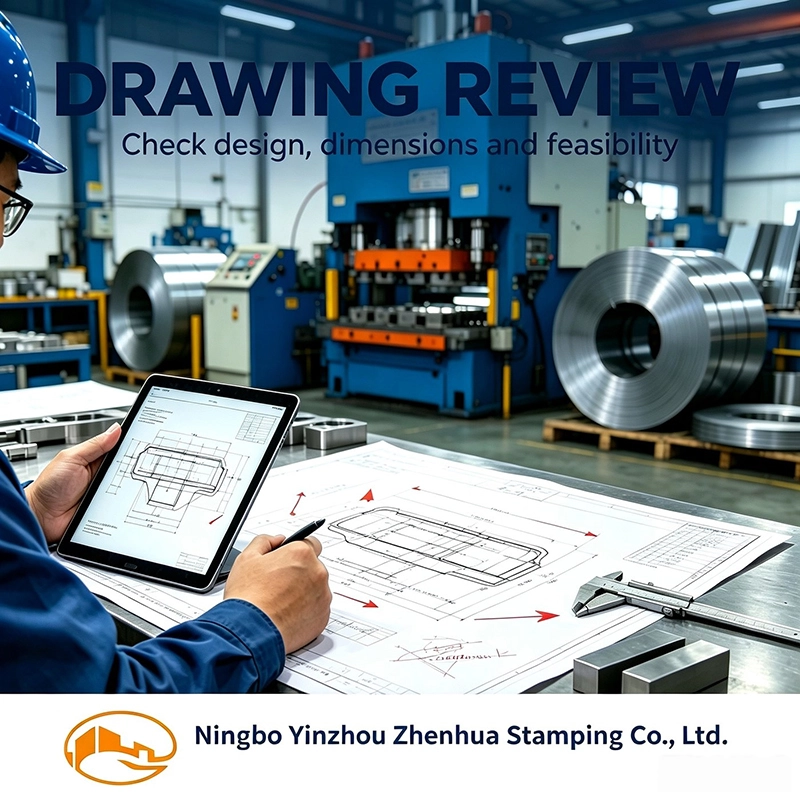
Yes. Our in-house tooling team can produce custom ID, OD, thickness, tooth count, tooth form and cone height to drawing, and we can work backwards from your required preload to a suitable cone height and material hardness. We normally confirm a DFM drawing before cutting the die.
A safety lock washer looks like a commodity part, but in high-volume assembly its cone height consistency and batch stability decide the assembly result. When requesting a quote, please include: thread size, required series (S/VS/L), serration requirement, mating part material and thickness, and the assembly torque requirement.
Contact note: Standard S / VS / L series and non-standard sizes can be quoted; tooth geometry and cone height inspection reports are available on request. Price and lead time are subject to final sales confirmation.
Those three inputs are enough for us to confirm die coverage, material, finish and delivery. Custom safety lock washers move from drawing to prototype using in-house dies.
✅ Get free sample!! Contact us today
✅ We will contact you within 24 hours