Base Material
65Mn spring steel (hardened)
- Character & Fit
- Sharp teeth, strong bite
- Common Finishes
- Zinc, black oxide, zinc-aluminum flake
- Inquiry Focus
- Heat-treat hardness, hydrogen embrittlement, tooth change after plating

Tooth lock washers are a core Level-2 category under Zhenhua's Lock Washers range. When your joint needs a positive bite rather than a soft push, a tooth lock washer is the first candidate. Zhenhua backs the range with in-house tooling and 30–400 t pressing under IATF 16949 , supplying automotive Tier-2/Tier-3 chains and export programs worldwide.
Tooth lock washers are a core Level-2 category under Zhenhua's Lock Washers range. When your joint needs a positive bite rather than a soft push, a tooth lock washer is the first candidate.
How do you choose tooth lock washers for a soft aluminum housing? The deciding factors are three: tooth count, tooth angle, and how much surface marking you can accept. Buy tooth lock washers from Ningbo Yinzhou Zhenhua Stamping Co., Ltd. and you get more than a washer — you get a repeatable bite-lock solution: tooth height and sharpness stay controlled from first sample to full container, with material traceability on every batch.
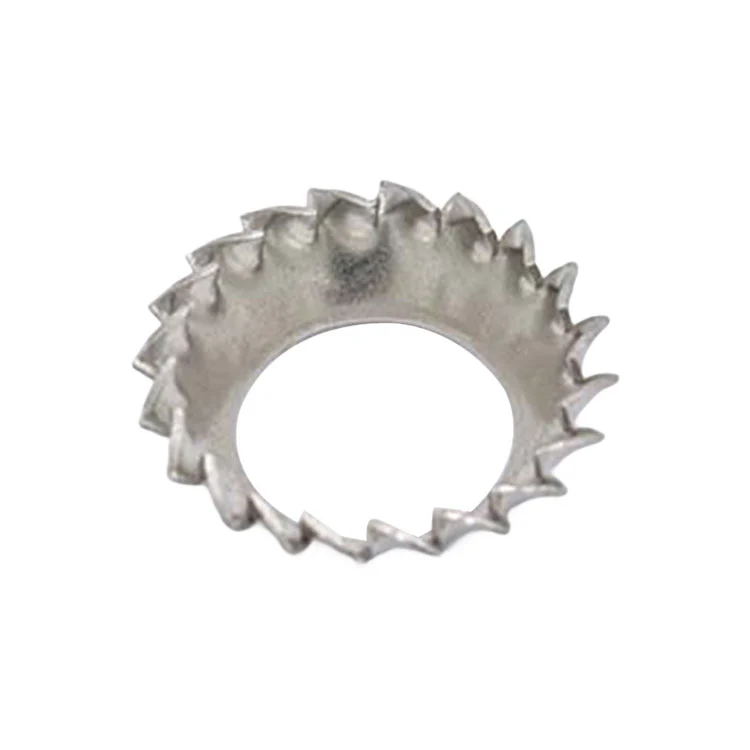
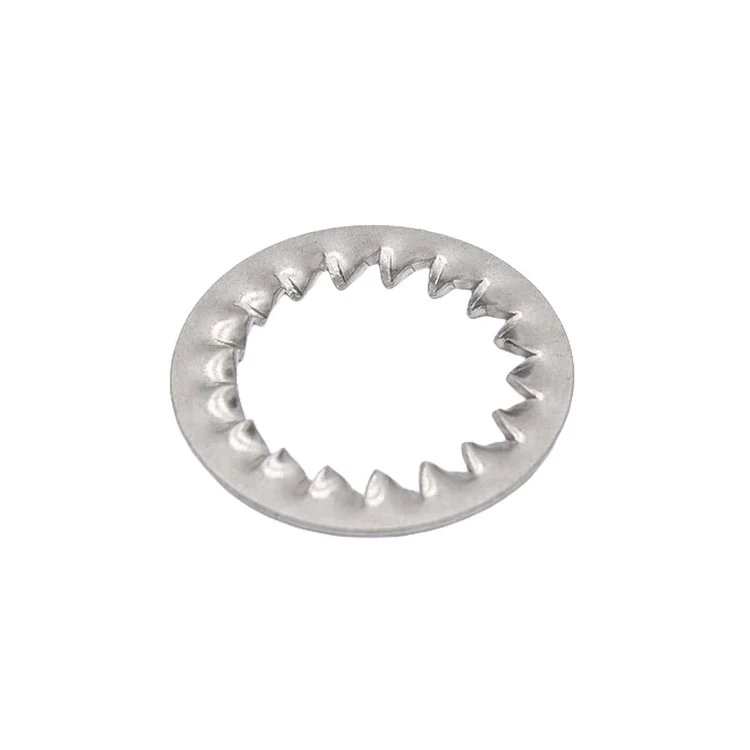
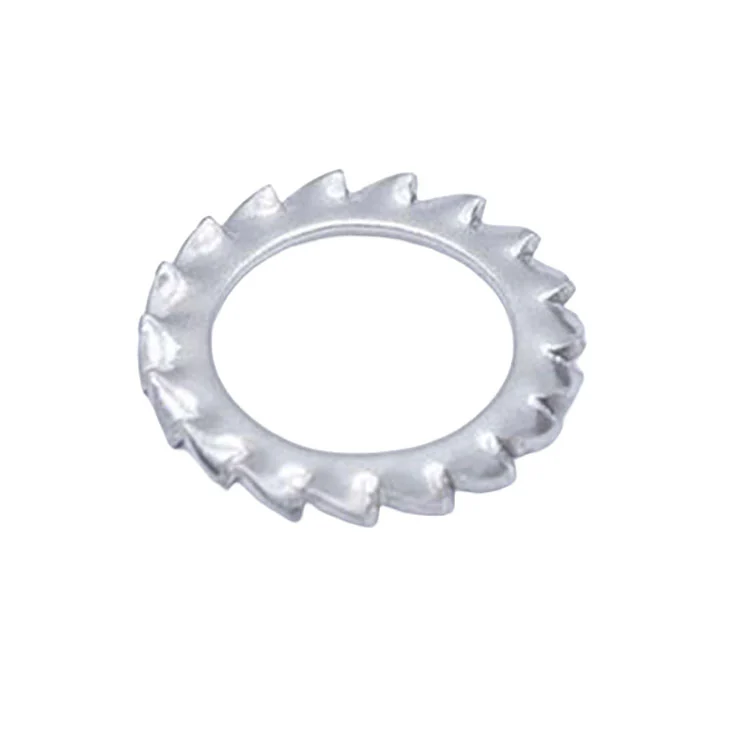
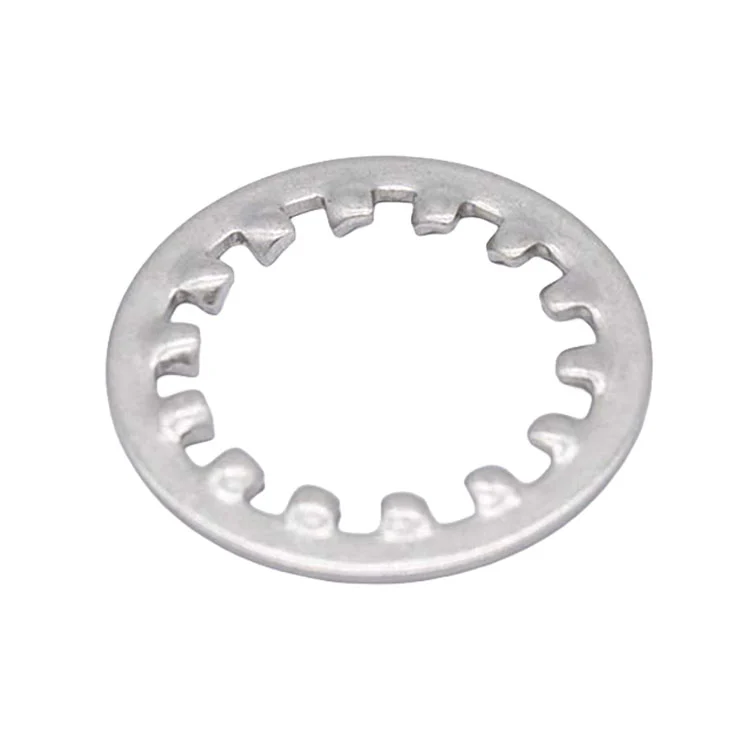
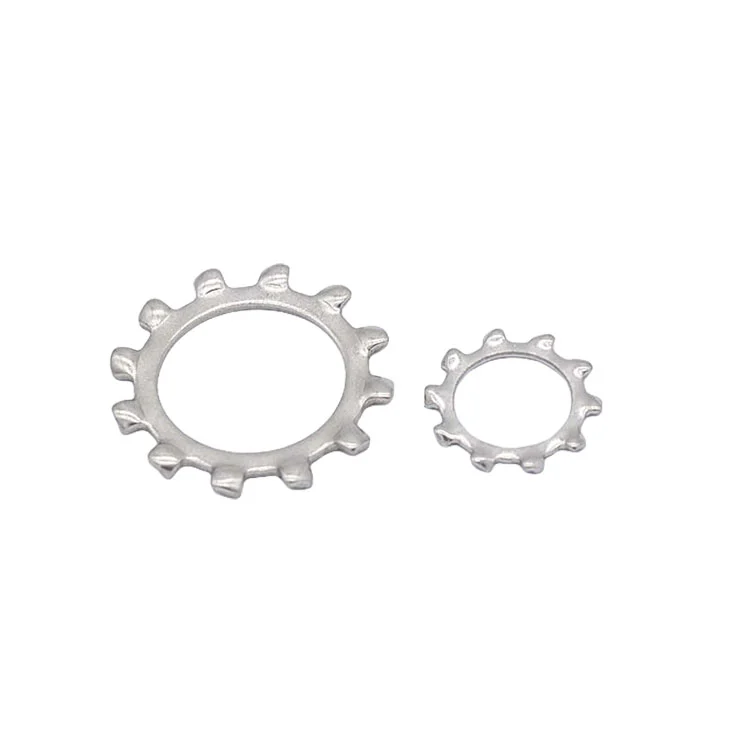
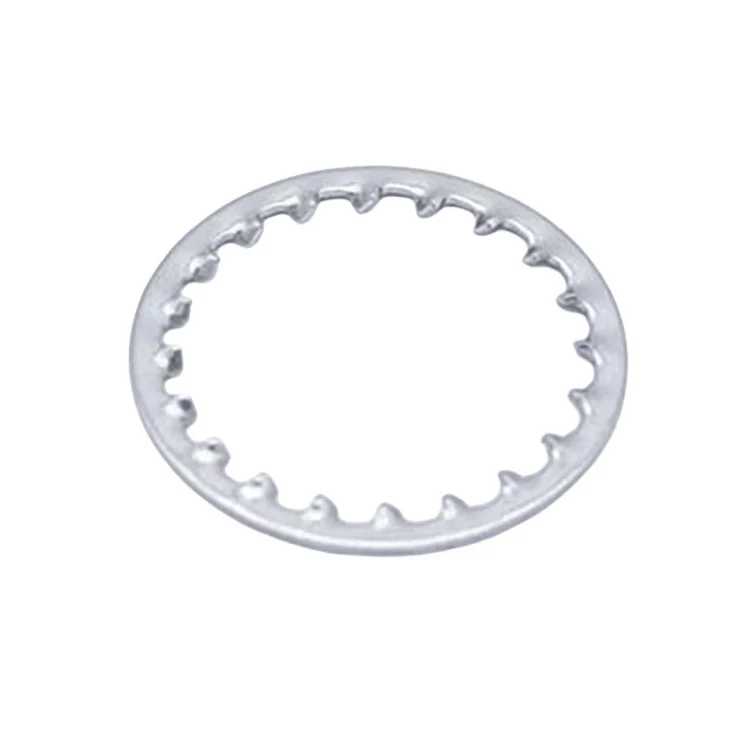
A tooth lock washer is a stamped spring washer with serrations: external teeth (commonly DIN 6797 form A), internal teeth (DIN 6797 form J) or a combined internal-external pattern. When the bolt is tightened, the teeth embed into the nut face and the part surface, creating a mechanical bite that blocks relative rotation; the washer's own spring action also compensates minor settling.
| Feature | Advantage | Benefit to You |
|---|---|---|
| Full-circle sharp teeth | Positive mechanical lock, independent of friction | Reliable anti-rotation under vibration |
| External / internal / int-external types | Free choice by appearance and bearing surface | One bolt fits different cosmetic needs |
| One-piece thin-sheet stamping | Small axial height, light weight | Suits compact, lightweight assemblies |
| Progressive-die volume runs | Controlled tooth height and sharpness | Stable biting on automated lines |
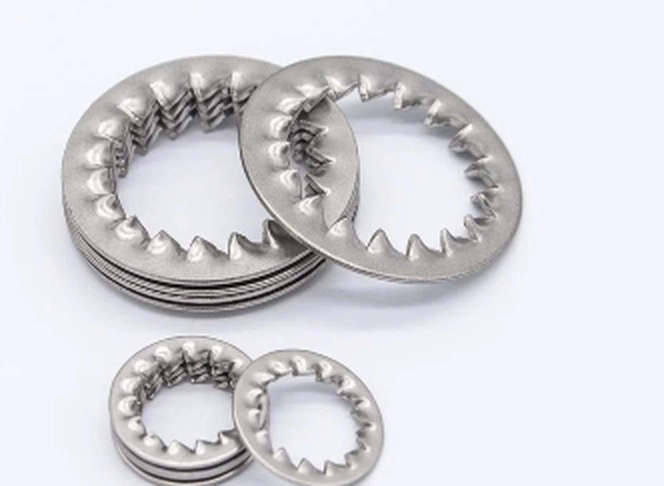
Selection note: the bite leaves marks. On cosmetic or sealing surfaces, prefer the internal-tooth type and confirm the acceptable marking level first.
The four common types differ by tooth position - choose by the bearing surface first, cosmetic requirement second:
| Type | Structure | Typical Use |
|---|---|---|
| External (DIN 6797 A) | Teeth on the outer circle grip both faces | General anti-rotation, highest volume |
| Internal (DIN 6797 J) | Teeth around the bore; smooth outer edge | Countersunk spots, cosmetic faces, small heads |
| Internal-external | Bites both ways, strongest lock | Demanding anti-rotation positions |
| NFE 27-626 (French standard) | French tooth geometry and sizes | French-standard drawings, EU projects |
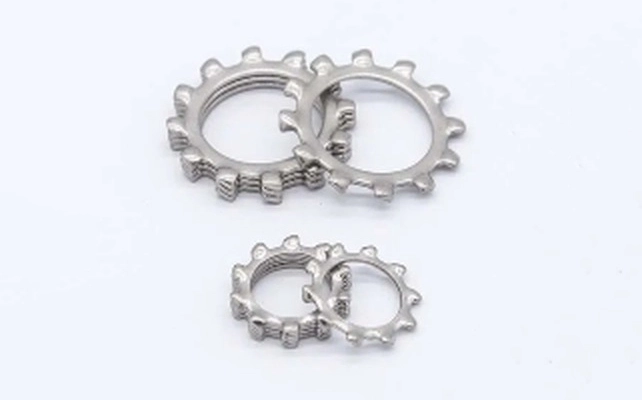
Selection note: specific dimensions follow DIN 6797 / NFE 27-626 standard values and Zhenhua's latest cost catalog or customer drawings.
Keep base material and surface finish separate: the material sets tooth hardness and spring, the finish sets corrosion protection and appearance.
Finish note: electroplating hardened tooth washers needs a hydrogen-embrittlement assessment and possible baking; plating thickness changes how deep teeth bite — state the color/passivation system, film build and salt-spray hours in one go at inquiry; hot-dip galvanizing is not recommended for small precision tooth washers.
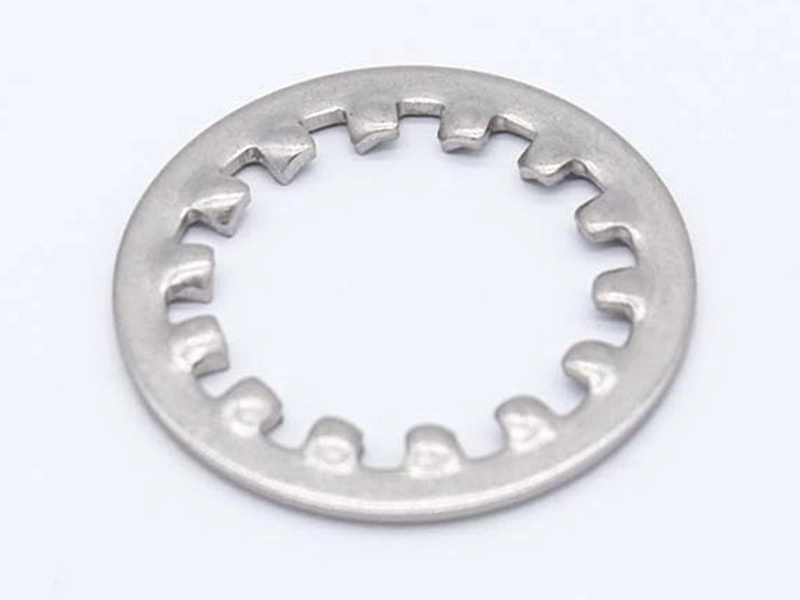
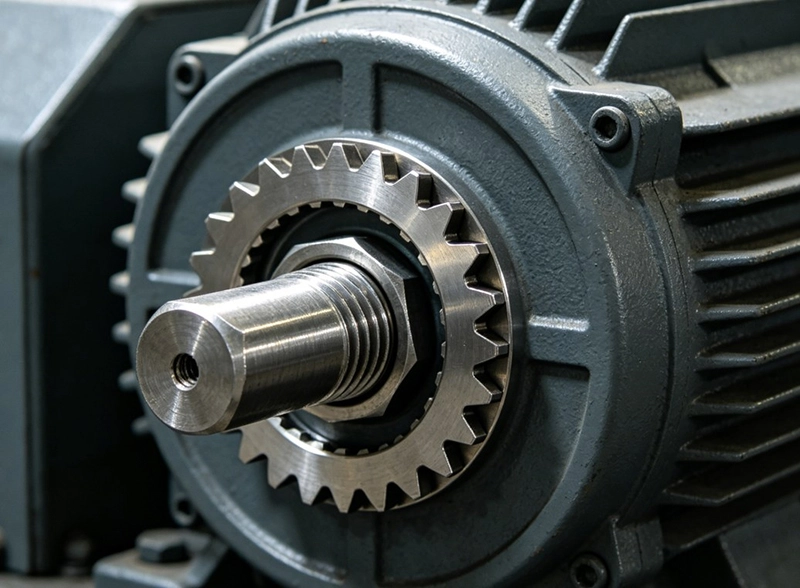
Motors & electromechanical: motor end bells, aluminum-geared housings — soft substrates where tooth count and angle are matched to the base hardness.
Electrical & appliances: terminal blocks, control panels, appliance assembly lines.
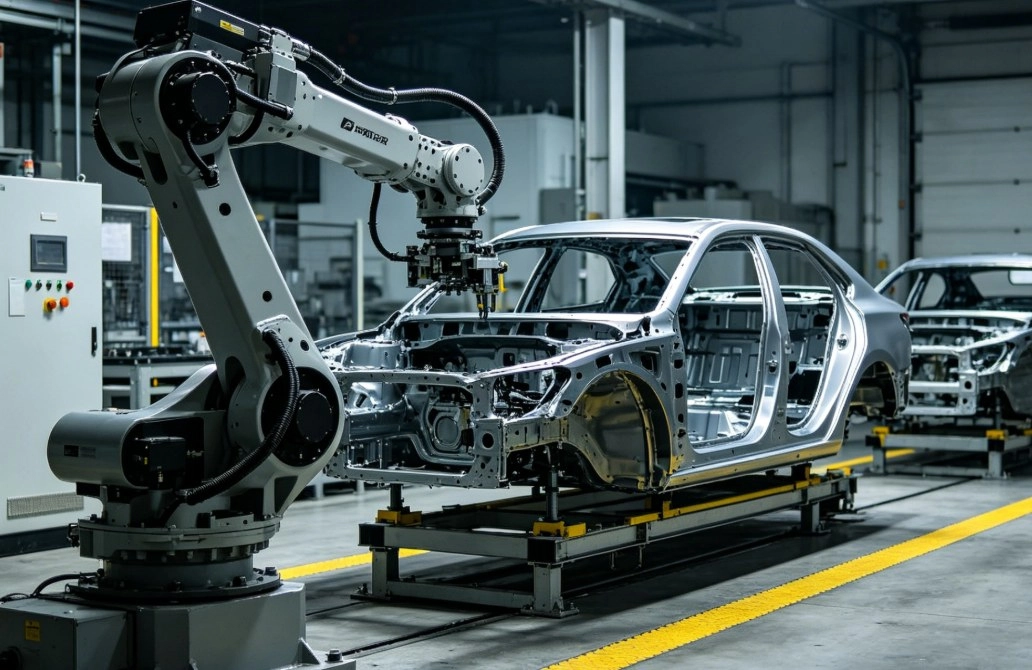
Automotive: interior parts and electrical boxes at low-to-medium torque (Zhenhua supplies as an IATF 16949 Tier-2/Tier-3 automotive chain member).
General machinery: sheet-metal covers, nameplates and pipe clamps — any bolted joint that must not rotate.
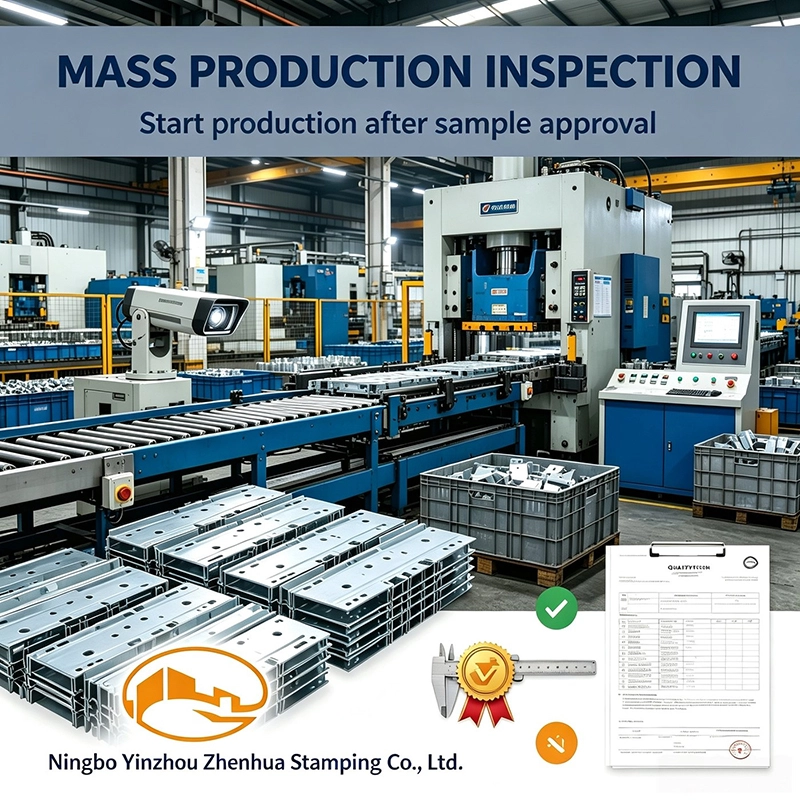
Process quality control - six gates
Incoming material verification: every coil is checked on the element analyzer for composition, with thickness, spec and batch documents confirmed; customers can trace any batch number.
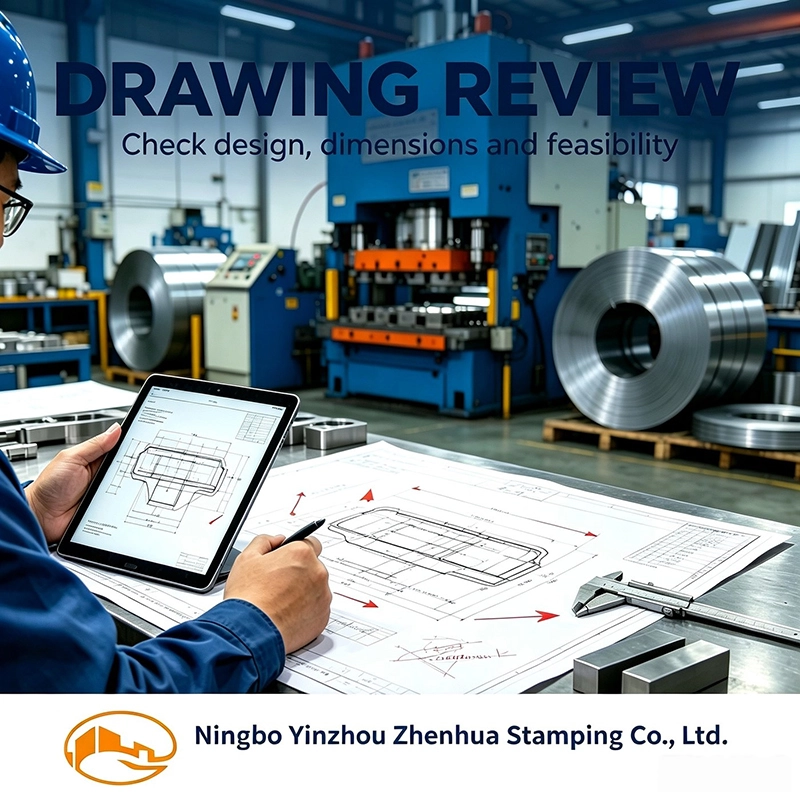
First-article inspection: key dimensions, tooth/clip geometry and appearance are checked after every setup before continuous production is released.
In-process patrol: bin-change checks plus a patrol round every 2–3 hours; any abnormality stops the press and quarantines the current and previous batches.
Post-treatment re-verification: heat treatment and surface treatment — including outsourced work returning to the plant — are re-checked batch by batch for hardness, film build and appearance.
Finished-part screening: vision inspection plus 100% manual quick-sorting as required, focused on cosmetic defects and mixed parts.
Batch traceability: customer batch/order numbers are linked to raw-material and production batches; quality records ship with the goods.
Incoming material verification: every coil is checked on the element analyzer for composition, with thickness, spec and batch documents confirmed; customers can trace any batch number.
First-article inspection: key dimensions, tooth/clip geometry and appearance are checked after every setup before continuous production is released.
In-process patrol: bin-change checks plus a patrol round every 2-3 hours; any abnormality stops the press and quarantines the current and previous batches.
Post-treatment re-verification: heat treatment and surface treatment — including outsourced work returning to the plant — are re-checked batch by batch for hardness, film build and appearance.
Finished-part screening: vision inspection plus 100% manual quick-sorting as required, focused on cosmetic defects and mixed parts.
Batch traceability: customer batch/order numbers are linked to raw-material and production batches; quality records ship with the goods.
The eight questions below cover what assembly engineers and purchasers ask us most often — selection, material, plating and batch traceability. If your question is not here, just send it to us directly.
Three factors: tooth count, tooth angle and the marking you can accept. Soft substrates suit more teeth with a gentler angle — shallow but widely distributed bite. Tell us the housing material and surface requirement and we will suggest a type from experience.
External is the general-purpose workhorse with the largest grip circle; internal keeps the outer edge clean for countersinks and cosmetic faces; internal-external bites both ways for demanding joints. Choose by bearing surface and appearance.
Not recommended. Teeth dull after disassembly and the bite drops noticeably. For frequently serviced joints use a hex nut with a lock washer instead.
Hardened 65Mn gives the sharpest teeth and strongest bite, usually plated; stainless trades some locking force for corrosion resistance. Outdoor or chemical duty: 304 / 316L.
Yes. Film build changes how deep the teeth penetrate; we control it to gauge and biting requirements. State the plating system, thickness and salt-spray requirement in one go.
Electroplated high-hardness steel carries that risk; an assessment with possible baking is required. Note your hardness and service conditions at inquiry and we will reply after process review.
The bite mark is by design. On decorative or sealing faces choose the internal-tooth type, confirm acceptable marking, or move to another locking solution.
IATF 16949 in operation: element analysis of incoming material, first-article checks, timed patrols, dual finished-part screening and batch traceability — PPAP documentation available for automotive customers.
Those three inputs are enough for us to confirm die coverage, material, finish and delivery. Custom tooth lock washers move from drawing to prototype using in-house dies.
✅ Get free sample!! Contact us today
✅ We will contact you within 24 hours