
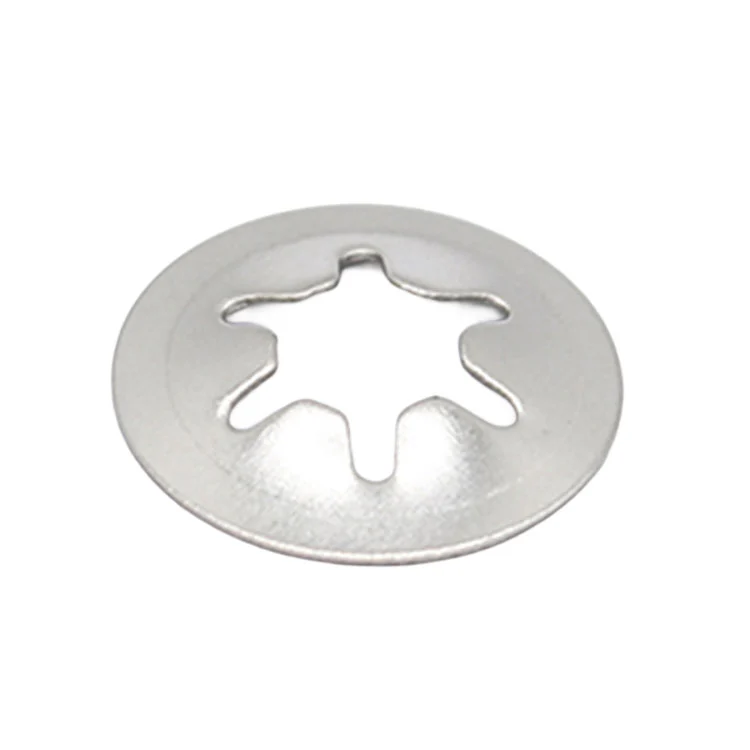
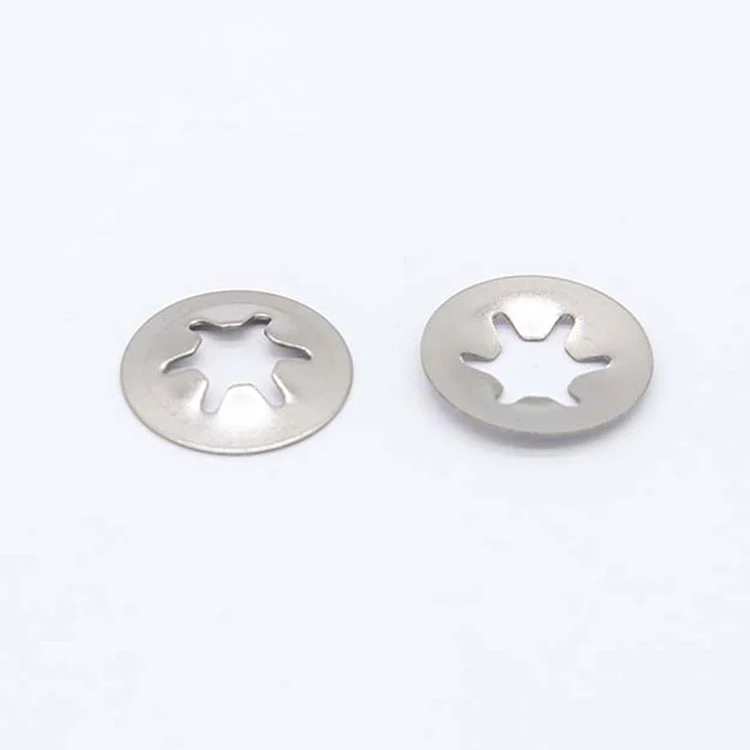
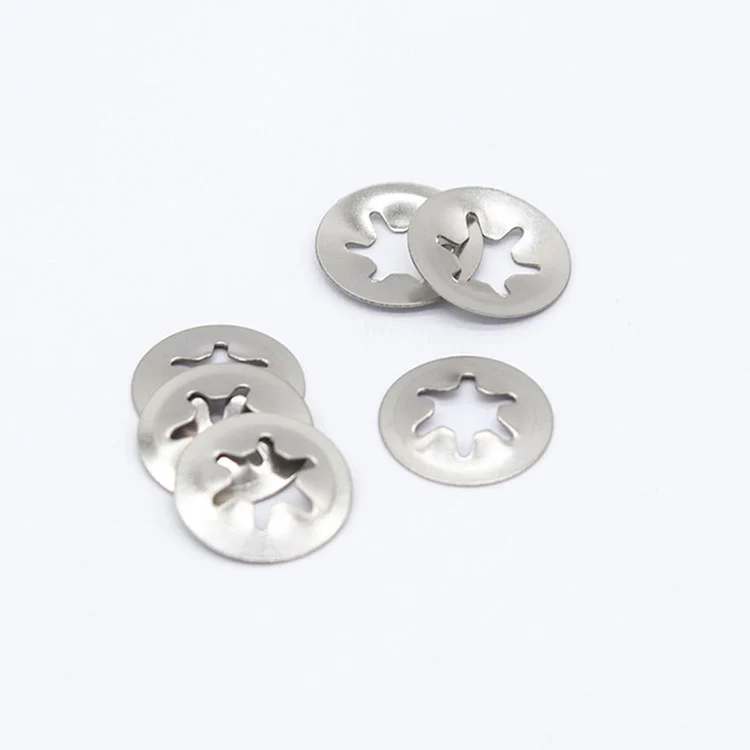
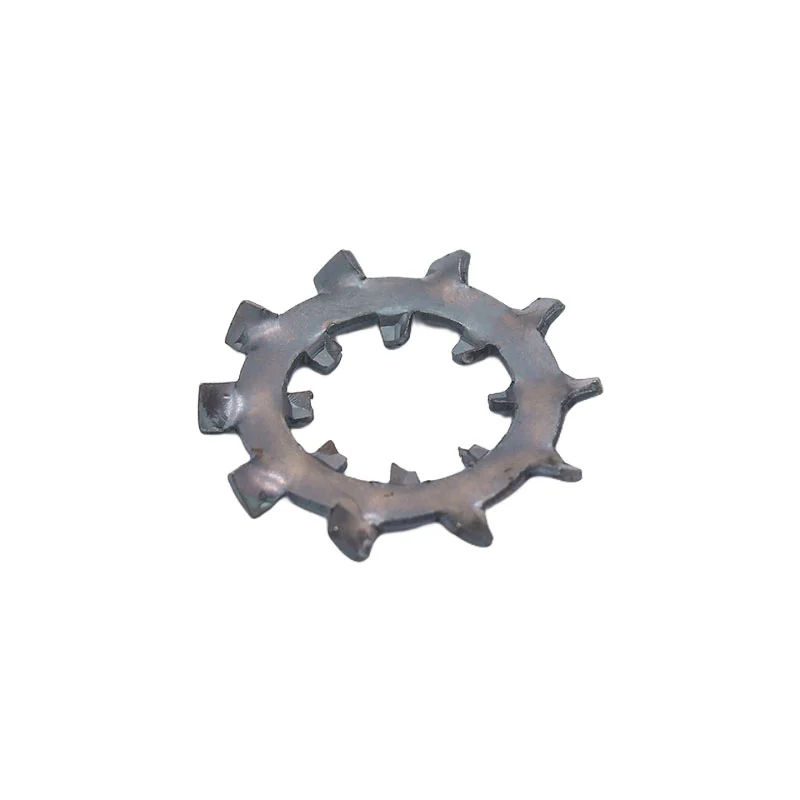
Internal star-shaped teeth grip plain shafts for tool-free axial retention of bearings, gears and rotating components.
Stamping parts manufacturer
Owned factory
Stamping capacity · 120 presses up to 450 T
Quotation response
Recommended Technical Specification Table
|
|
|||||||||||||||||||||||||||||||||||||||||||||||||||||||||||||||||||||||||||||||||||||||||||||||
|
Standard star lock washer sizes are available for M2–M12 shaft diameters.For customized applications, Zhenhua can adjust the internal tooth geometry, outside diameter, thickness and other dimensional requirements according to the shaft and retained component.
The shaft diameter and tooth configuration should be confirmed together, because the retention force depends on the interaction between the internal teeth and the shaft surface.
Star lock washers use star-shaped internal teeth that bite onto plain shafts for tool-free axial retention, holding bearings, gears and other rotating parts in place without threads, grooves or additional components.
During push-on installation, the internal teeth deflect against the shaft surface. Their spring action generates radial gripping force, while the tooth edges engage the shaft to resist axial movement.
This makes the washer suitable for assemblies where machining a retaining groove or adding a threaded fastening system is undesirable. It can be installed directly by pressing the washer onto the shaft, making it particularly useful for compact or high-volume assemblies.
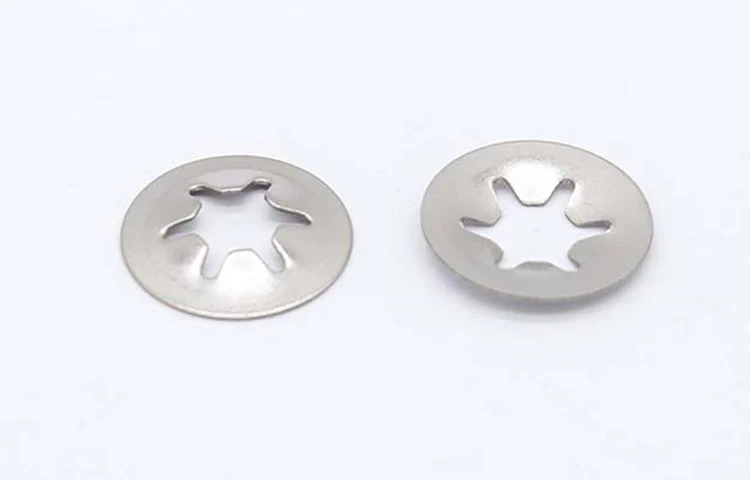
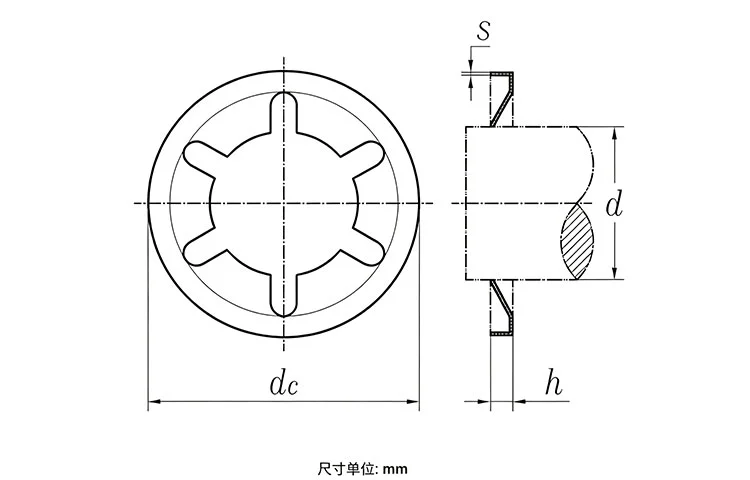
The performance of a star lock washer is closely related to the relationship between the shaft diameter, tooth geometry, washer thickness and material properties.
The internal teeth need sufficient spring-back to grip the shaft while maintaining the required axial retention. For this reason, simply selecting a washer by nominal shaft size is not always sufficient for demanding applications.
For customized projects, Zhenhua can develop the tooth profile, tooth geometry, outside diameter and thickness according to the confirmed shaft and assembly requirements.
The standard design provides a low-profile retention solution, with a dimensional tolerance of ±0.05 mm for consistent fitting and automated assembly.
The material determines the washer's spring characteristics, hardness and corrosion resistance.
Material selection should be based on the shaft material, service environment, expected load and required retention performance.
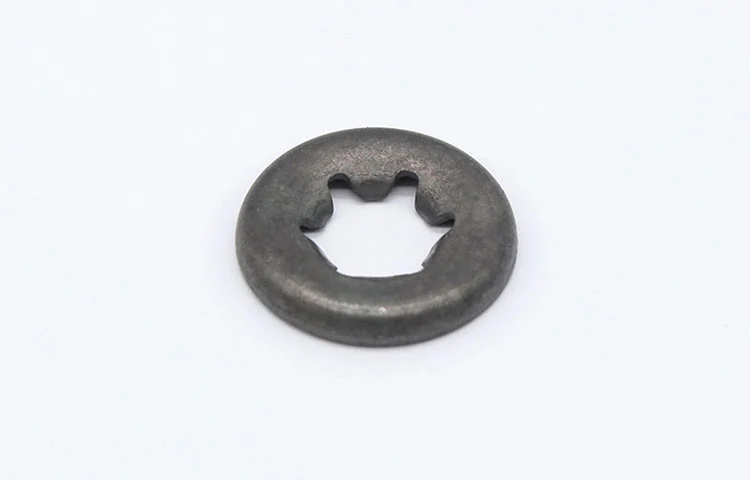
Star lock washers are most useful when a component needs to be retained axially on a plain shaft without adding threads or machining a retaining groove.
Used to retain fan components and other rotating parts on shafts where compact assembly is required.
Suitable for compact internal mechanisms where quick push-on assembly helps reduce assembly steps.
Used for selected shaft-mounted components where a low-profile axial retention method is required.
Suitable for retaining components on plain shafts when the shaft design does not include a groove or threaded end.
Applicable to various rotating or shaft-mounted assemblies where push-on retention is appropriate.
The internal tooth is the functional part of a star lock washer, so forming consistency is critical to assembly performance.
Zhenhua manufactures star lock washers through stamping / progressive die processes, with mold development and machining capabilities available for customized designs. The forming process controls the tooth geometry, washer thickness, outside diameter and overall profile according to the confirmed drawing.
The company supports sample development, small-batch trial production and mass production, allowing customized tooth configurations to be verified before volume production.
Production is operated under an IATF 16949 quality system, with traceability from raw material to finished part.
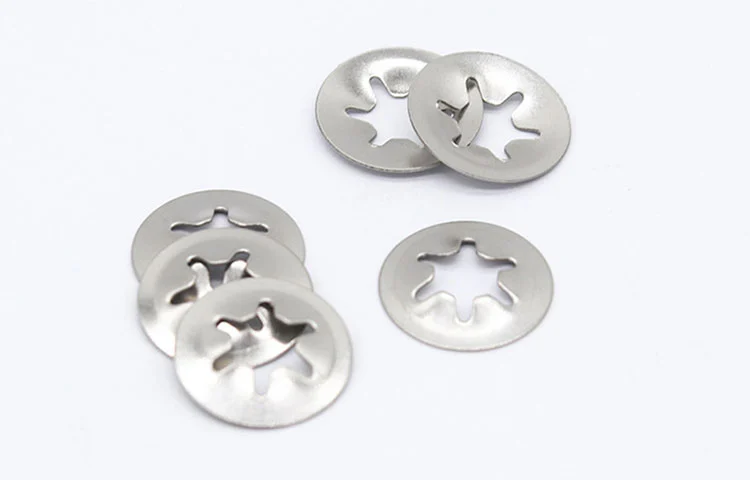
The internal teeth are designed to flex as the washer is pushed onto the shaft. This deformation creates radial spring force between the teeth and shaft surface, while the tooth edges resist axial movement. The retention effect therefore depends on the interaction between the washer's tooth geometry, material properties and the shaft diameter.
The shaft diameter is only one part of the selection. Engineers should also consider the shaft surface condition, material, hardness, axial load, vibration level and available installation space. Excessively hard shaft surfaces may reduce tooth engagement, while an unsuitable shaft diameter can lead to insufficient retention or excessive installation force.
It can be used where the shaft-mounted component requires axial retention and the washer is correctly matched to the shaft and load conditions. However, a star lock washer should not be selected solely because the assembly is exposed to vibration. For high-vibration or safety-critical applications, the required retention load, shaft tolerance and tooth engagement should be verified before production.
Yes. The interaction between the internal teeth and shaft surface directly affects retention performance. Shaft hardness and surface finish should therefore be considered together with the washer material and tooth geometry. For a new application, providing the shaft material and hardness allows the washer specification to be evaluated more accurately.
65Mn is suitable for applications where the washer requires higher hardness, strength and spring-back characteristics. After heat treatment, the material provides the mechanical properties required for the internal teeth to deform during installation and maintain their spring action in service. The specified tensile strength is ≥800 MPa.
A star lock washer is advantageous when a component needs to be retained on a plain shaft without machining a retaining groove. It also provides a low-profile push-on installation method. A circlip may be more appropriate when the shaft is already designed with a retaining groove or when the application requires a defined groove-based retaining system. The choice should be based on load, shaft design, assembly method and service conditions rather than product name alone.
For critical retention applications, reuse is generally not recommended. The internal teeth are intentionally deformed during the initial push-on installation, and repeated removal may change their original spring characteristics and tooth engagement. Using a new washer during reassembly provides more predictable retention performance.
AISI 304 standard sizes are generally kept in stock and can be prioritized. Other materials or non-standard sizes generally require approximately 15–30 days, with the final lead time confirmed according to specifications, quantity and production schedule.
Send us your shaft size, material, quantity, application requirements and drawing or sample.
Zhenhua will review the shaft-to-tooth fit, material, dimensions and production requirements before confirming the quotation and lead time.
send your size, quantity and drawing for countersunk lock washers, and we will reply after confirming specifications and lead time.
✅ Get free sample!! Contact us today
✅ We will contact you within 24 hours
