
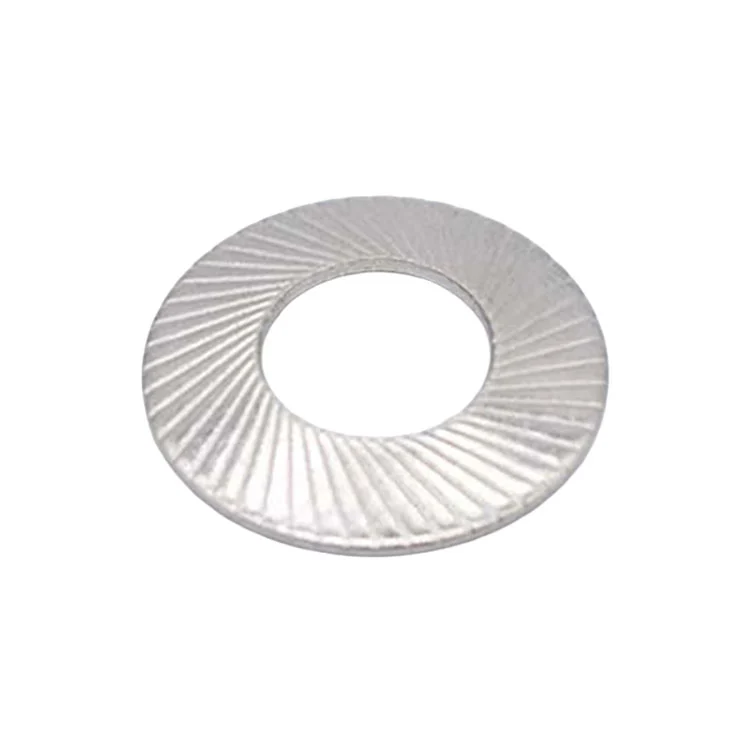
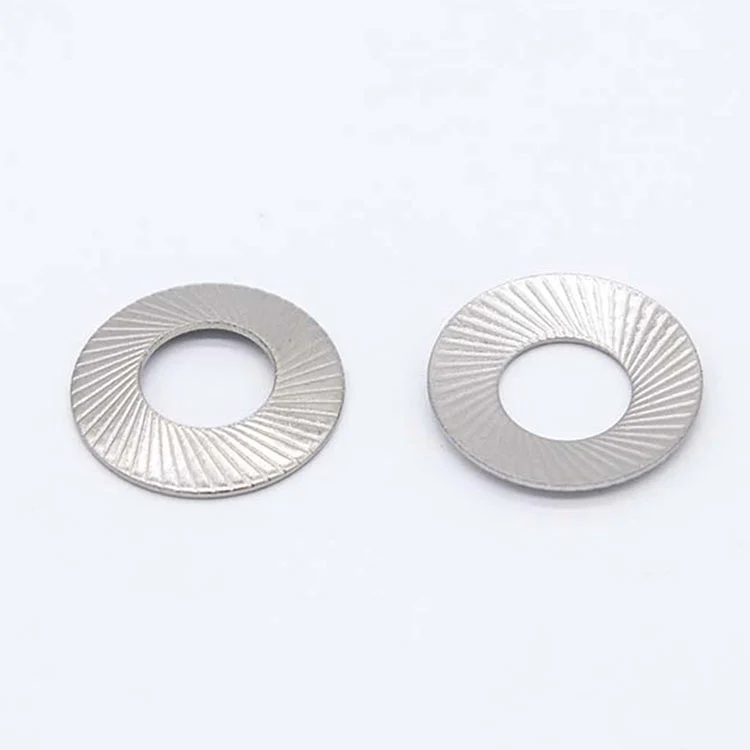
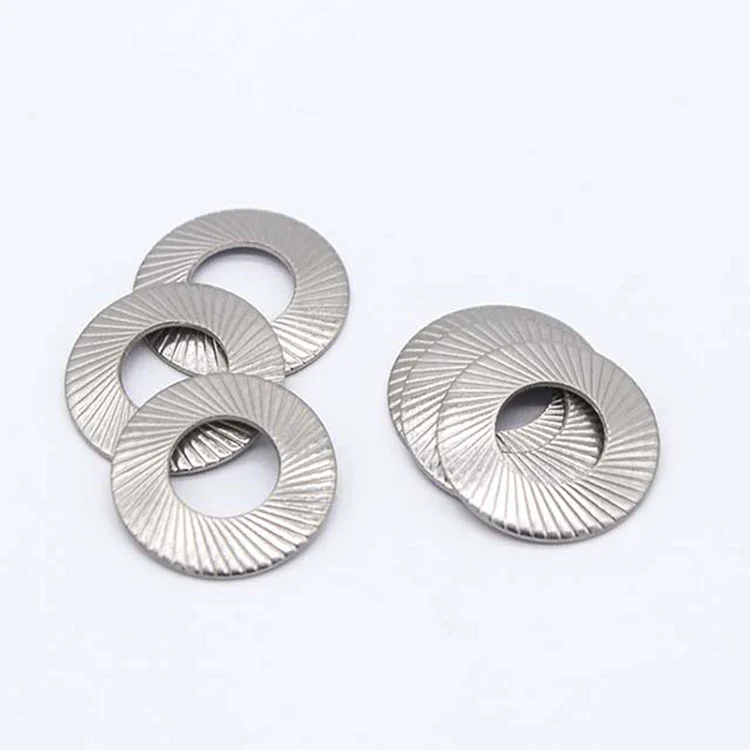
DIN 9250L Serrated Disc Lock Washers are the heavy-duty type of the DIN 9250 serrated disc washer series, designed for bolted joints where a more substantial washer section and higher load-bearing capability are required.
Stamping parts manufacturer
Owned factory
Stamping capacity · 120 presses up to 450 T
Quotation response
The washer pair consists of conical disc bodies with radial serrations on both faces. During tightening, the teeth engage with the bolt head or nut and mating surface, while the disc geometry provides elastic spring action within the joint.
The L type is distinguished by its thicker cross-section and heavy-duty construction. Compared with the standard DIN 9250S, it is intended for applications where joint loading, fastening forces and mechanical demands justify a heavier washer section.
Typical applications include heavy machinery, construction equipment, industrial equipment, mining machinery, structural assemblies and other demanding fastening systems.
Ningbo Yinzhou Zhenhua Stamping Parts Co., Ltd. manufactures DIN 9250L Serrated Disc Lock Washers in AISI 304, AISI 316 and 65Mn, with standard and customized dimensions available according to product drawings, samples and customer requirements.
|
|
|||||||||||||||||||||||||||||||||||||||||||||||||||||||||||||||||||||||||||||||||||||||||||||||||||||||||||||||||||||||||||||||||||||||||||||||||||||||||||||||||||||||||||||||||||||||||||||||||||||||||||||||||||||||
|
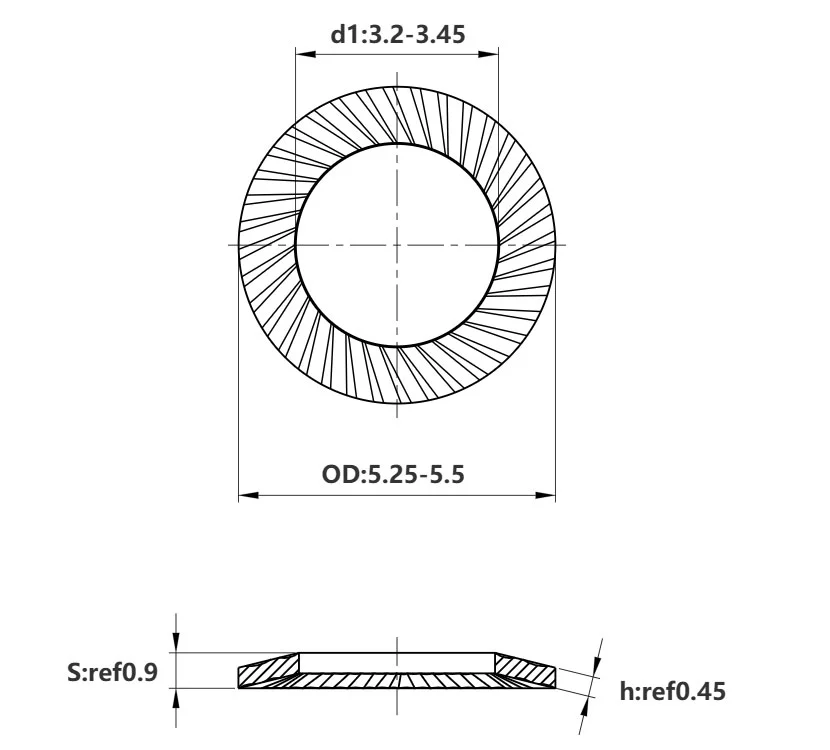
For custom retaining washers, the shaft diameter, tooth profile and washer dimensions should be confirmed according to the actual assembly.
For a heavy-duty bolted joint, washer selection should account for more than the bolt diameter alone. The DIN 9250L is designed for applications where the washer needs to provide a more substantial load-bearing section within the fastening system.
The correct selection still depends on bolt grade, joint geometry, tightening conditions, substrate and operating environment.
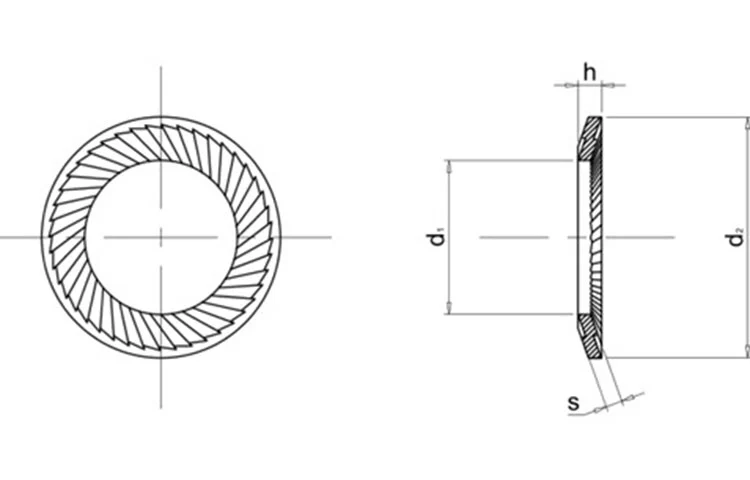
DIN 9250L Serrated Disc Lock Washers uses radial serrations on both faces of the washer pair. One toothed face engages with the bolt head or nut, while the opposite toothed face engages with the mating component.
When the fastener is tightened, the teeth mechanically engage with the contacting surfaces. At the same time, the conical disc is compressed and provides elastic spring action. This combination helps the bolted connection resist rotational movement caused by vibration and dynamic loading.
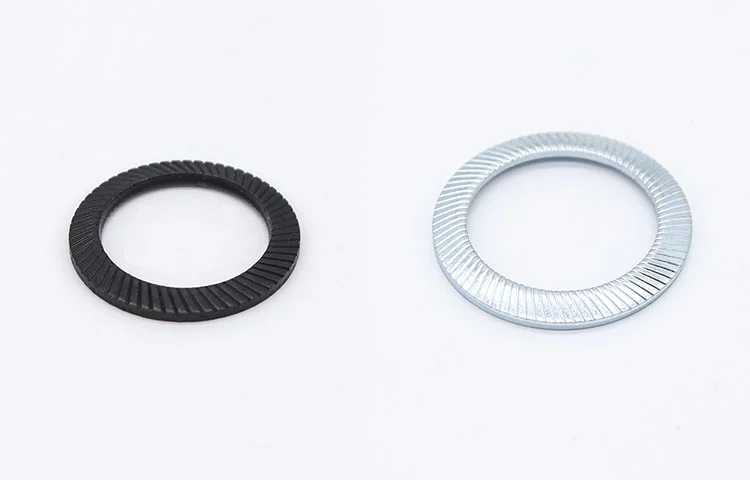
The defining difference between DIN 9250L and the more compact S type is the heavier washer section. A heavier section can be advantageous where the fastening system requires greater structural support from the washer and where installation space is sufficient. This makes DIN 9250L more appropriate for applications such as:
Heavy equipment exposed to vibration, shock and changing operating loads.
Fastening systems operating under demanding mechanical conditions.
Large assemblies where joint reliability and mechanical stability are important.
Applications where vibration, environmental exposure and long service periods need to be considered.
Connections where a compact standard washer is not the preferred design. Application suitability should always be verified against the complete bolted-joint design.
The DIN 9250 series offers different structural options for different joint requirements.
|
|
||||||
|
The L type should therefore not be selected simply because it is “stronger.” The more useful question is whether the joint actually requires its heavier section and load-oriented design.
The toothed faces of the DIN 9250L washer pair should face the bolt head or nut and the mating surface.
For high-load or safety-critical joints, washer selection should be validated together with the bolt, nut, joint materials and tightening procedure.
A washer cannot compensate for inadequate bolt preload, poor joint design or unsuitable mating surfaces.
DIN 9250L should be considered for bolted joints where a heavier washer section and higher load-oriented design are required. Typical applications include heavy machinery, construction equipment, mining equipment and demanding industrial assemblies.
The main distinction is the heavier section and corresponding load-oriented design. However, “stronger” should not be used as a standalone selection criterion. Joint load, available space, bolt size, substrate and installation conditions all need to be considered.
DIN 9250VS focuses on a reinforced section with greater free height and elastic recovery, making preload retention a key selection consideration. DIN 9250L is positioned as the heavy-duty type where a more substantial section and higher-load joint requirements are the priority.
It can be used in appropriately designed high-vibration joints. The double-sided serrations provide mechanical engagement while the disc geometry provides spring action. For safety-critical equipment, the complete fastening system should be tested or validated under the actual operating conditions.
The mating surfaces need sufficient mechanical integrity for the serrated teeth to engage without causing unacceptable damage. Surface hardness, coatings, material type and flatness can all affect performance.
Not necessarily. AISI 304 may be adequate for many outdoor environments, while AISI 316 is generally considered when chloride exposure, marine conditions or more aggressive corrosion environments are expected. Material selection should be based on the actual environment.
Reuse is generally not recommended for critical joints. After disassembly, inspect the teeth and disc for wear or deformation. Replacing the washer is preferred when the original locking function needs to be maintained.
Yes. Zhenhua can evaluate non-standard dimensions based on customer drawings, samples or specified requirements. Tooling and production requirements will be confirmed during the engineering review.
AISI 304 standard sizes may be available depending on current inventory. Other materials and non-standard products generally require production, with a typical lead time of approximately 15–30 days depending on specifications, tooling and order quantity.
send your size, quantity and drawing for countersunk lock washers, and we will reply after confirming specifications and lead time.
✅ Get free sample!! Contact us today
✅ We will contact you within 24 hours
