Washers
DIN 9250VS Serrated Disc Lock Washers

DIN 9250VS Serrated Disc Lock Washers

AISI 304 (A2) AISI 316 (A4) 65Mn

Disc-spring preload + double-sided tooth bite | Reinforced section, high load | OEM/ODM

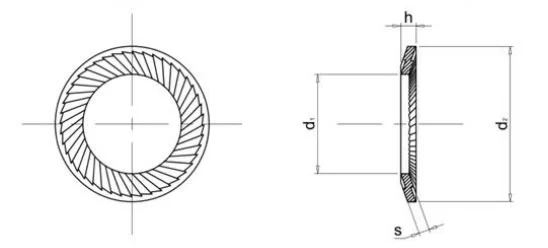
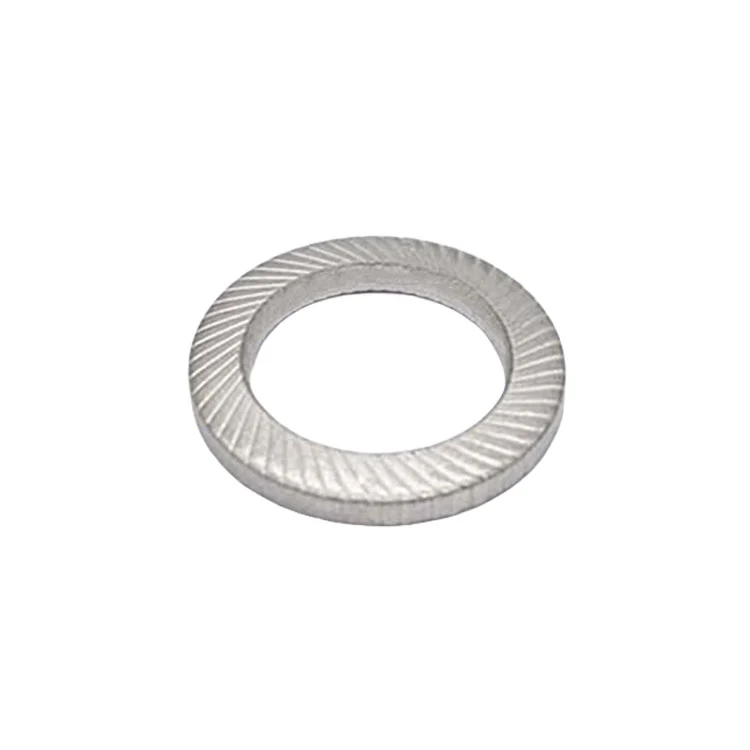
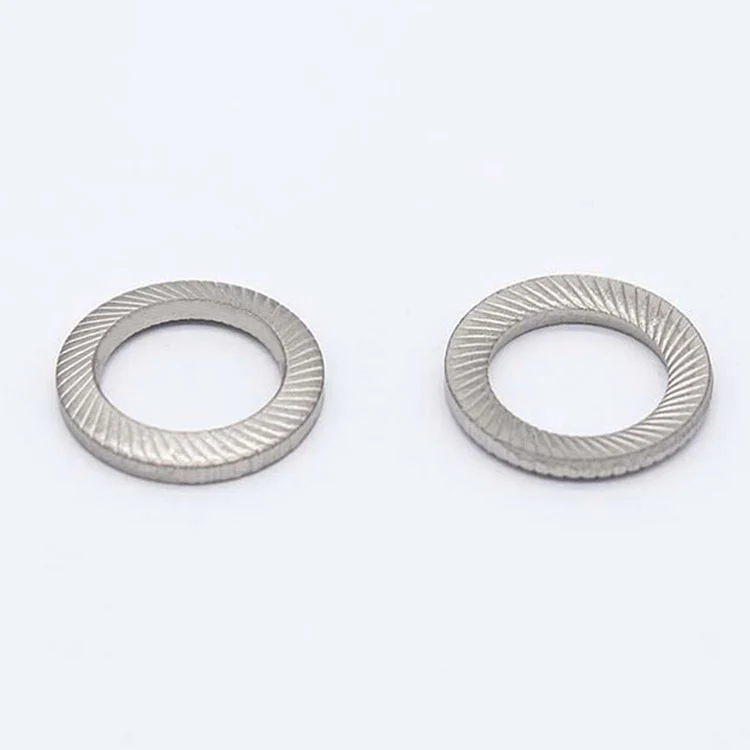
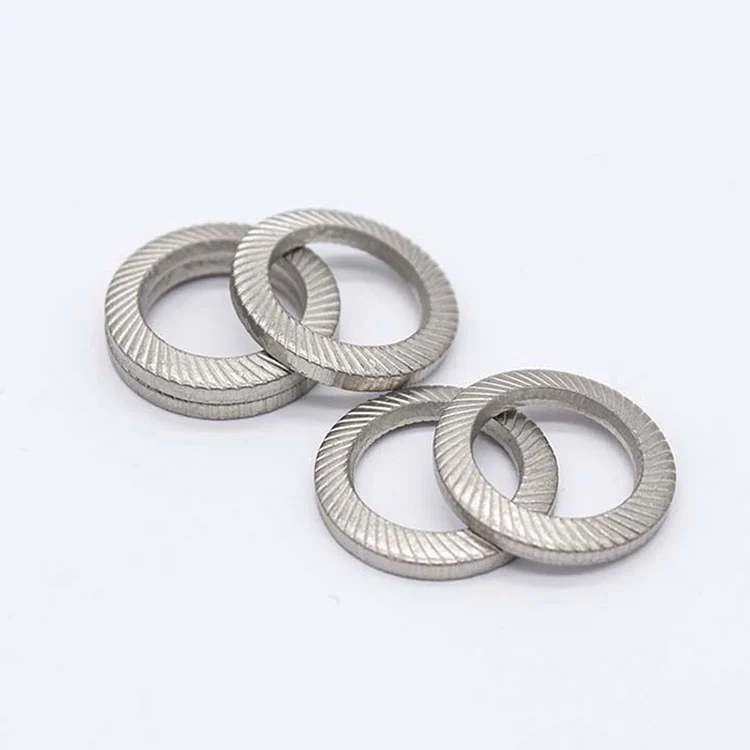
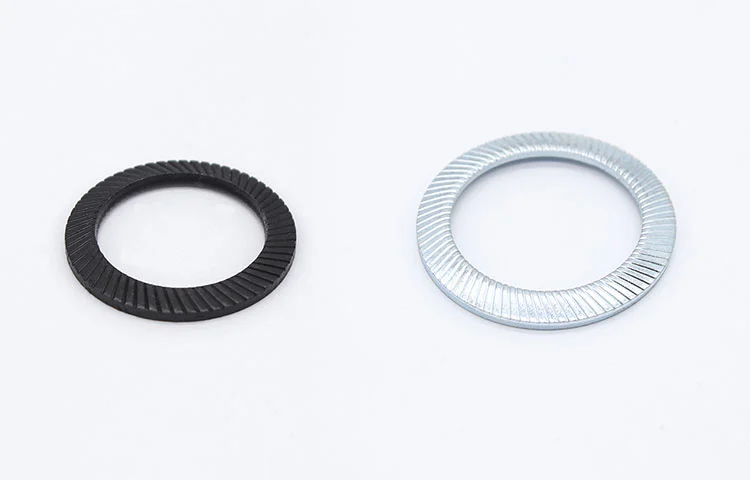
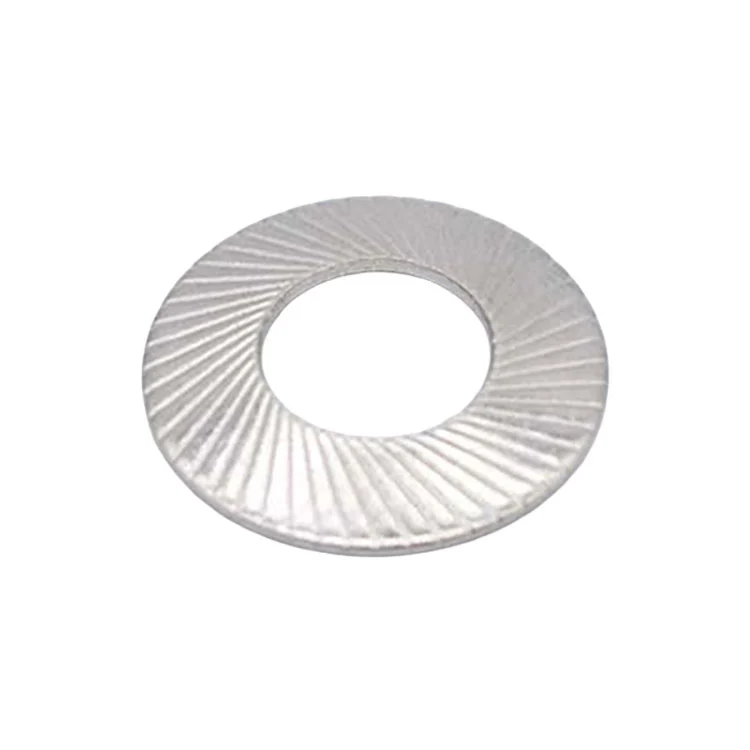
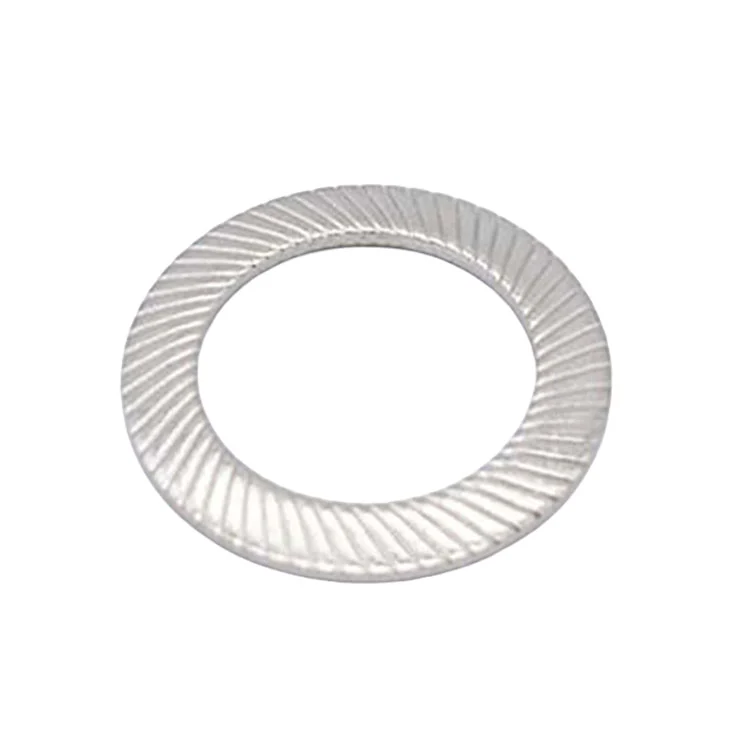
DIN 9250VS Serrated Disc Lock Washers are the reinforced version of the DIN 9250 serrated disc washer series. The washer uses a conical disc-spring structure with radial teeth on both faces. When compressed during tightening, the serrations engage with the bolt head or nut and mating surface, while the disc geometry provides elastic recovery within the joint.

Since 1993

Stamping parts manufacturer

12,000 m²

Owned factory

12,000 t/yr

Stamping capacity · 120 presses up to 450 T

24 h

Quotation response

Product Overview

The defining feature of the VS type is its reinforced cross-section and greater spring travel compared with the standard S type.

This makes DIN 9250VS particularly relevant when the fastening system needs to maintain joint preload through vibration, impact or repeated operating loads.

Rather than selecting the VS type simply because it is thicker, engineers should consider the complete joint: required preload, available installation space, bolt size, substrate, vibration level and surface condition.

Ningbo Yinzhou Zhenhua Stamping Parts Co., Ltd. supplies DIN 9250VS Serrated Disc Lock Washers in AISI 304, AISI 316 and 65Mn and supports customized dimensions based on customer drawings or samples.

Size Chart

Safety Lock Washers DIN9250 Type "S"

DIN 9250VS Serrated Disc Lock Washers

*All measurements in millimeters (mm)*

Model
S1.6
S2
S2.5
S3
S3.5
S4
S5
S6
S6.35
S7
S8
S10
S11.1
S12
S12.7
S14
S16
S18
S19
S20
S22
S24
S25.4
S27
S30
S33
S36
d1 d2 s h min h max kg/1000 Thread(mm) Thread(inch)
1.7 3.2 0.35 0.38 0.6 0.013 1.6 —
2.2 4. 0.35 0.39 0.6 0.021 2. —
2.7 4.8 0.45 0.49 0.9 0.039 2.5 —
3.2 5.5 0.45 0.51 0.9 0.049 3. 3/8"
3.7 6. 0.45 0.52 0.9 0.055 3.5 —
4.3 7. 0.5 0.59 1. 0.085 4. 5/32"
5.3 9. 0.6 0.73 1.1 0.167 5. 3/16"
6.4 10. 0.7 0.82 1.2 0.2 6. —
6.7 9.5 0.7 0.79 1.2 0.15 6.35 1/4"
7.4 12. 0.7 0.89 1.3 0.355 7. —
8.4 13. 0.8 0.98 1.4 0.392 8. 5/16"
10.5 16. 1. 1.21 1.6 0.75 10. 3/8"
11.6 15.9 1. 1.18 1.6 0.595 11.1 7/16"
13. 18. 1.1 1.31 1.7 0.879 12. —
13.7 19. 1.1 1.33 1.8 0.976 12.7 1/2"
15. 22. 1.2 1.52 2. 1.641 14. 9/16"
17. 24. 1.3 1.63 2.1 1.984 16. 5/8"
19. 27. 1.5 1.85 2.3 2.97 18. —
20. 30. 1.5 1.98 2.5 4.1 19. 3/4"
21. 30. 1.5 1.94 2.5 3.742 20. —
23. 33. 1.5 2.08 2.7 4.507 22. 7/8"
25.6 36. 1.8 2.32 2.9 5.91 24. —
27. 38. 2. 2.52 3.1 7.449 25.4 1"
28.6 39. 2. 2.52 3.1 7.369 27. —
31.6 45. 2. 2.78 3.6 10.78 30. 1 1/8"
34.6 50. 2.5 3.26 4. 18. 33. 1 1/4"
38 54 2.5 3.38 4.2 21.28 36. 1 3/8"

Non-standard sizes: available according to customer drawings, samples or specified requirements.

Why the Reinforced Section Matters

  • In a bolted joint subject to vibration, thermal cycling or changes in operating load, the washer needs to do more than provide initial locking. It also needs enough elastic capacity to accommodate small changes in the joint while helping maintain clamp load.
  • DIN 9250VS uses a reinforced cross-section with greater free height than the standard S type. This gives the washer more available spring travel and a stronger elastic response. When the joint moves or settles during operation, the washer can recover within its elastic range and continue supporting the clamping condition.
  • For applications where the standard DIN 9250S does not provide enough spring capability, the reinforced VS design can be a better choice.
  • The washer is only one part of the bolted joint, however. Actual preload depends on the bolt grade, tightening torque, friction conditions, joint stiffness and installation method.

Double-Sided Teeth and Disc-Spring Action

  • The locking function of DIN 9250VS comes from two complementary mechanisms.
  • The radial teeth mechanically engage with the fastener and mating surface.
  • The conical disc provides spring action as the washer pair is compressed.
  • During tightening, the toothed faces are placed against the bolt head or nut and the workpiece. The resulting combination of surface engagement and elastic spring force helps resist rotational loosening under vibration and dynamic loading.

When Should You Choose DIN 9250VS?

DIN 9250VS is worth considering when the joint has one or more of the following characteristics

  • Higher preload retention requirements
  • Continuous vibration or impact
  • Repeated changes in operating load
  • Greater joint movement or settling
  • Limited tolerance for loss of clamp load
  • Heavy machinery or structural assemblies
  • Applications where a reinforced washer section is preferred over the compact S type

Typical application areas include rail equipment, construction machinery, automotive assemblies, powertrain components, mining equipment and outdoor steel structures, subject to engineering validation.

DIN 9250VS vs DIN 9250S and DIN 9250L

The three DIN 9250 types should not be treated simply as “light, medium and heavy” versions. Their selection is better understood through the joint requirements.

Type
DIN 9250S
DIN 9250VS
DIN 9250L
Design focus Selection priority
Standard compact section Space and conventional loads
Reinforced section and spring behavior Preload retention and demanding vibration
Heavy-duty section Higher-load joints

VS is the reinforced option when preload retention and elastic recovery are more important than having the most compact profile.
Material Options

  • AISI 304 (A2): general-purpose stainless steel with balanced corrosion resistance for industrial equipment, outdoor structures and conventional machinery.
  • AISI 316 (A4): molybdenum-bearing stainless steel with improved resistance to chlorides and acids for marine, chemical, rail and frequent-washdown environments.
  • 65Mn: spring-steel grade with good elasticity and fatigue resistance for high-stress and repeated-impact joints.

Surface Treatments

  • Plain: retains the natural silver stainless steel surface and metallic appearance.
  • Polished: a higher surface finish for appearance-sensitive applications.
  • Passivated: removes surface free iron and reinforces the passive film for improved corrosion resistance.
  • Trivalent blue-white zinc: eco-friendly zinc plating with a bright blue-white appearance for general corrosion protection.
  • Black oxide / phosphating: matte dark surface commonly used inside machinery or where a non-reflective appearance is required.
  • Eco Dacromet: chromium-free zinc-aluminium coating with good corrosion resistance for outdoor or demanding environments.
  • Special surface treatments: custom finishes can be realized on request; process and lead time are confirmed at inquiry.
DIN 9250VS Serrated Disc Lock Washers

OEM/ODM Customization and Manufacturing Strength

  • Integrated Manufacturing: Ningbo Yinzhou Zhenhua integrates stamping, progressive die making, and machining in a single factory, possessing independent mold design and maintenance capabilities and enabling full-process traceability.
  • Production Based on Drawings: Custom sizes, materials, surface treatments, and packaging can be tailored to customer drawings or samples, with seamless integration from sample approval to mass production.
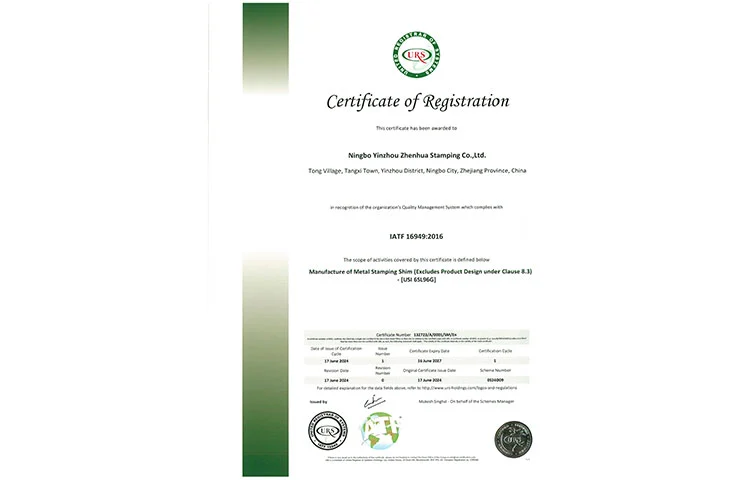
  • Quality System: Adopting a quality management system compliant with IATF 16949 standards, covering the entire production process, with a focus on batch consistency and process control.
  • Direct Engineering Support: Factory engineers are directly responsible for selection, prototyping, and mass production, reducing intermediate steps and ensuring precise requirements.

FAQ

What makes DDIN 9250VS Serrated Disc Lock Washers different from DIN 9250S?

Both use the same basic double-sided serrated disc locking principle. The VS type has a reinforced section and greater free height, providing greater elastic travel and recovery. It is therefore more suitable when preload retention under vibration or changing joint conditions is a key requirement.

What does “reinforced” mean in DIN 9250VS?

The reinforced designation refers primarily to the washer's geometry, including its thicker section and greater free height compared with the standard S type. These characteristics increase the washer's spring capability within the joint.

Why does free height matter?

Free height affects the amount of elastic deformation available when the washer is compressed during installation. Greater spring travel can help the washer accommodate certain changes in the joint and recover elastically, supporting preload retention.

Is DIN 9250VS suitable for high-vibration applications?

It can be suitable for bolted joints exposed to vibration and dynamic loading when the washer, bolt and mating materials are correctly selected. The complete joint design and installation conditions should always be evaluated for safety-critical applications.

Is VS always better than S?

No. A reinforced washer is not automatically the correct choice. If the joint has limited installation space and conventional loading requirements, DIN 9250S may be more appropriate. VS should be selected when its additional spring capability provides a genuine engineering benefit.

Can DIN 9250VS be used with stainless steel bolts?

Material compatibility should be evaluated based on the complete fastening system, including galvanic corrosion risk, environmental exposure, bolt grade and surface treatment. AISI 304 and AISI 316 washer options are available for suitable stainless-steel applications.

Can DIN 9250VS be reused?

Reuse is generally not recommended for critical bolted joints. After disassembly, inspect the teeth and disc geometry for deformation, wear or damage. Replacing the washer is the safer approach when original locking performance is required.

Can non-standard VS washers be manufactured?

Yes. Zhenhua can evaluate custom DIN 9250VS dimensions based on customer drawings, samples or specified requirements. Tooling, dimensional feasibility and production lead time should be confirmed before production.

What is the typical production lead time?

AISI 304 standard sizes may be available depending on stock. Other materials and non-standard sizes generally require production, with a typical lead time of approximately 15–30 days subject to specification, tooling and order quantity.

Request a Quote

send your size, quantity and drawing for countersunk lock washers, and we will reply after confirming specifications and lead time.
X
We use cookies to offer you a better browsing experience, analyze site traffic and personalize content. By using this site, you agree to our use of cookies. Privacy Policy
Reject Accept