Engineers have always understood that a small bolt head can crush a soft surface. Ancient civilisations solved the problem with the simplest possible answer: put something between the bolt and the material. Historical records suggest wooden, lead and leather pads were used in Egyptian and Roman construction to spread clamping force and protect timber, stone and soft metal surfaces. The very idea of a washer is older than the threaded fastener itself.
The English word "washer" is thought to share roots with words meaning to guard or protect, which fits its original job perfectly: it protected the surface beneath a fastener.
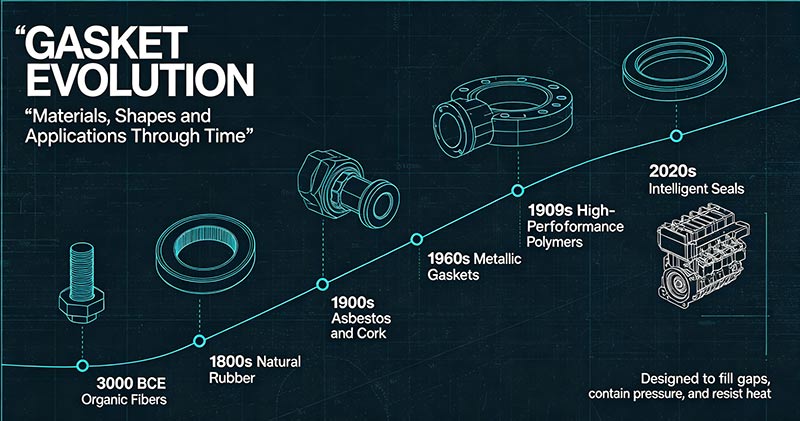
As steam power, railways and mass production arrived in the 19th century, bolts appeared in vast numbers, and so did the need for washers that could be made quickly and consistently. The second half of the century saw the first patented spring and lock washers, designed for a new problem: bolts that loosened under vibration. These early parts were still simple in geometry, but they established the idea that a washer could do more than spread load. It could actively resist loosening.
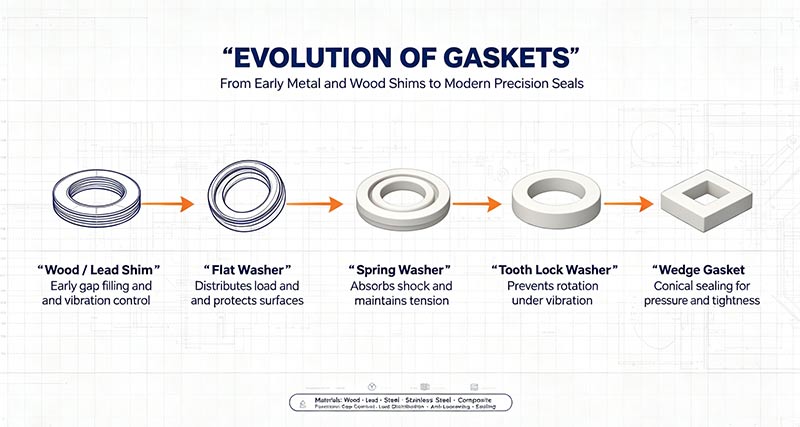
Standardisation transformed the industry. National standards such as the German DIN series defined flat washers, spring washers, serrated lock washers and conical washers, giving engineers a common language for dimensions, materials and performance. Later, ISO harmonised many of these into international specifications, so a DIN 125 flat washer and its ISO equivalent could be used interchangeably around the world.
For manufacturers, standards changed production too. Tight dimensional tolerances, defined material grades and repeatable surface treatments became the baseline for supplying industry.
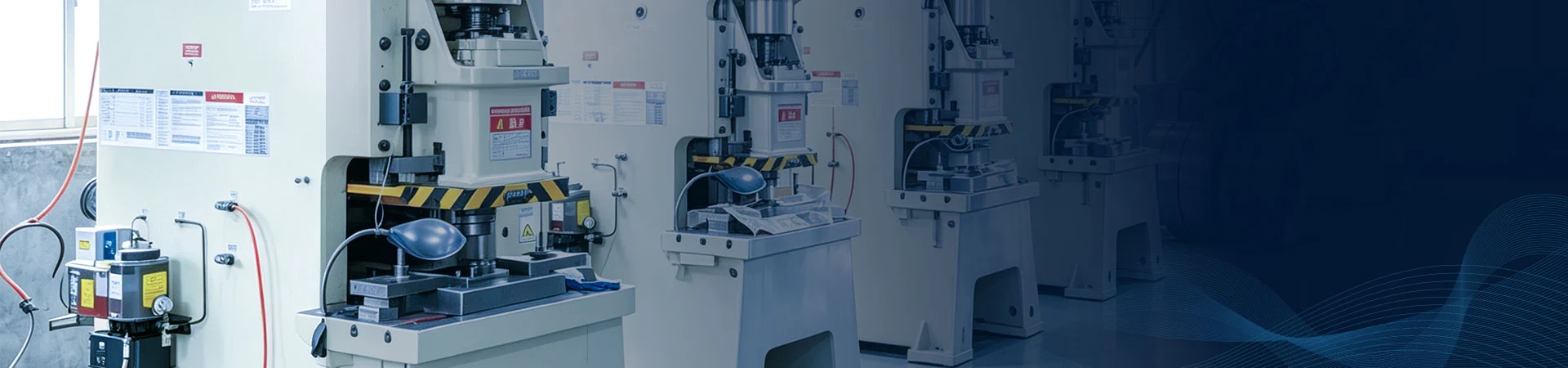
Modern washer manufacturing is a precision business. High-speed progressive-die presses stamp millions of parts with consistent geometry; in-house die design and maintenance keep tooth forms, cone angles and spring rates within specification; heat treatment gives carbon steel washers the hardness and fatigue life they need. Quality systems such as IATF 16949, combined with full material traceability, mean a buyer can follow a batch of washers from raw coil to finished carton.
Today the word "washer" covers an entire family of engineered components, each solving a different problem:
The evolution of the washer is a reminder that "a washer is a washer" is no longer true. Choosing the right family, material and finish requires understanding the joint: its load, vibration level, surface hardness and environment. That is why manufacturers like Ningbo Yinzhou Zhenhua Stamping Co., Ltd. offer engineering support alongside the parts themselves, helping customers select from flat, spring, serrated, wedge and conical designs, and supplying custom geometry from drawings or samples.
Ningbo Yinzhou Zhenhua Stamping Co., Ltd. supplies lock washers, spring washers, flat washers and stamped fasteners under IATF 16949, with in-house stamping, die design, heat treatment and finishing. Send your application details, drawings or samples through our website to confirm the right washer family, material and lead time.
✅ Get free sample!! Contact us today
✅ We will contact you within 24 hours
