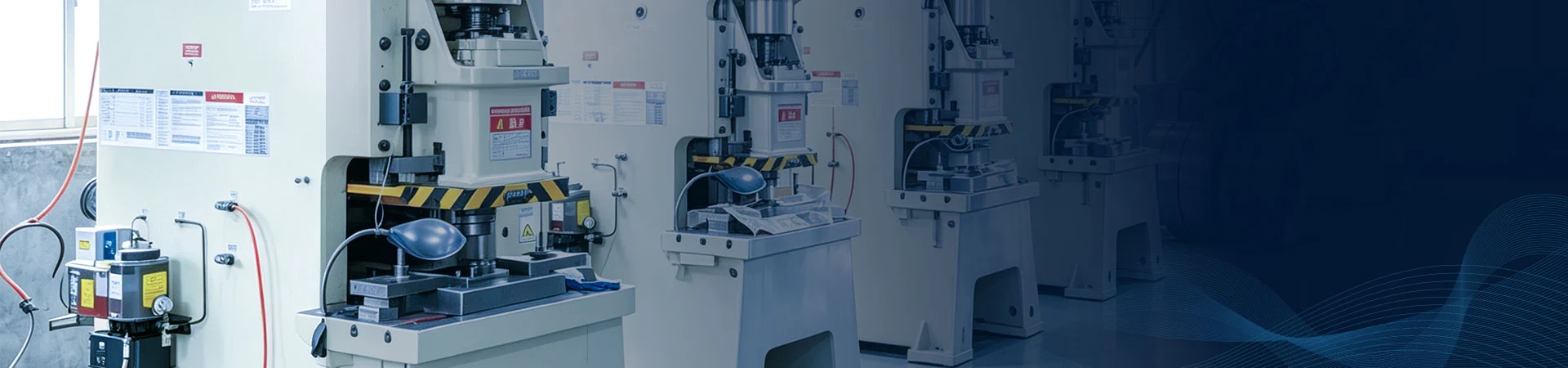
A bolted joint is never perfectly static. Materials creep, temperatures change, loads cycle and vibration shakes everything. Spring washers exist for exactly this reason: to store elastic energy and keep pushing back, so the joint keeps its preload. The journey from the humble split ring to today's engineered wave and conical washers is a story of understanding what actually makes a joint loosen.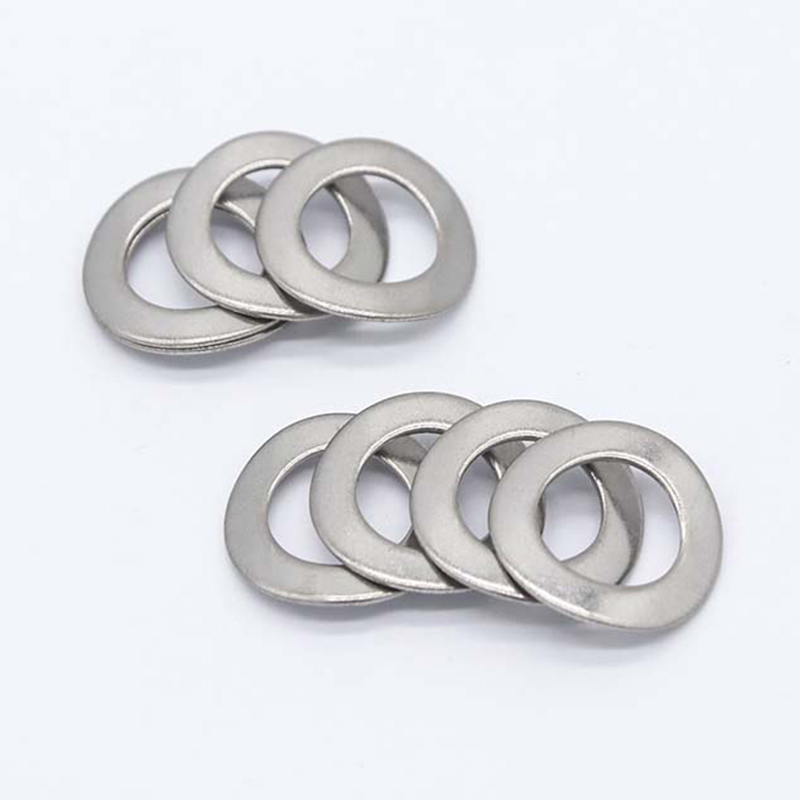
The split (helical) spring washer dominated for decades. It was inexpensive, simple to stamp, and its angled split created spring pressure against the nut. For light to medium assemblies it remains a familiar choice. Its limits are equally well known: the spring force is limited, the sharp edges can embed into soft surfaces, and under sustained vibration friction-based locking can fall short.
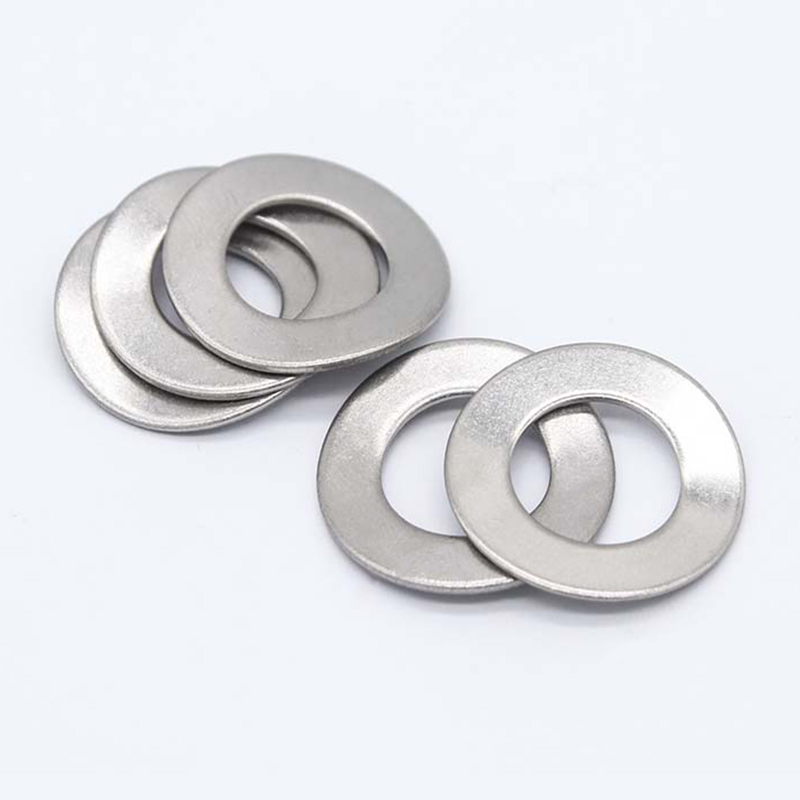
As assemblies became more compact, engineers needed controlled spring force in a thin package. Curved (single-wave) washers, standardised as DIN 137A, provide a larger deflection for compensating bigger gaps. Multi-wave washers, standardised as DIN 137B, use several continuous wave crests to distribute spring load evenly with a smaller deflection and a low profile - ideal for light loads and narrow spaces such as bearing preloading, motors, pumps and gearboxes.
For heavier loads, the conical spring washer - a Belleville-style disc - became the preferred answer. Standardised as DIN 6796, it uses a tapered disc profile that compresses under load to generate continuous axial spring force. Compared with split washers, the conical design delivers higher and more stable spring load, compensating thermal expansion, creep and relaxation while retaining bolt preload under repeated vibration. It suits automotive chassis, machinery, electrical equipment, rail and industrial automation.
Spring washers only work if the material behaves like a spring. That is why 65Mn carbon spring steel, heat treated for stable hardness and fatigue life, is a standard choice, alongside AISI 304 and AISI 316 stainless steel for corrosion resistance. Consistent cone angles, wave heights and thicknesses - held by progressive-die stamping - determine whether a spring washer performs to spec batch after batch.
| Type | Structure | Characteristic | Typical use |
|---|---|---|---|
| Split spring washer | Helical split ring | Spring pressure plus edge friction | General light-to-medium assemblies |
| DIN 137A curved | Single continuous wave | Large deflection, gap compensation | Medium loads, bigger gaps |
| DIN 137B multi-wave | Multiple wave crests | Even load distribution, low profile | Light loads, narrow spaces, bearing preload |
| DIN 6796 conical | Tapered disc | High stable spring force, preload retention | Heavy loads, vibration, creep compensation |
Selection starts with the joint: how much deflection is needed, how much space is available, how heavy the load is and what environment the part will live in. Zhenhua's engineers typically ask for the bolt size, application and any existing drawings, then shortlist the right spring washer family - or a custom wave and cone profile stamped from a drawing.
Tell Zhenhua your bolt size, load and available space, and we will confirm whether DIN 137A, DIN 137B, DIN 6796 or a custom design fits - with material and finish options confirmed at inquiry.
✅ Get free sample!! Contact us today
✅ We will contact you within 24 hours
