When fastening reliability matters, choosing the right washer can make a measurable difference. Zhenhua supplies DIN 6798V Conical External Serrated Lock Washers designed to combine external-tooth engagement with the elastic action of a conical profile. For manufacturers of machinery, automotive components, electrical equipment, and industrial assemblies, understanding how these washers work helps improve fastening design, component compatibility, and long-term joint performance.
DIN 6798V Conical External Serrated Lock Washers feature a shallow conical body and serrated outer edges. The teeth help resist relative rotation at the contact surfaces, while the conical structure provides elastic deformation under compression. These characteristics make the washers worth considering for selected bolted joints exposed to vibration, minor joint settling, or operating temperature changes. This guide explains their structure, working principle, dimensional selection, material options, applications, and purchasing considerations to help engineers and buyers specify the right component.
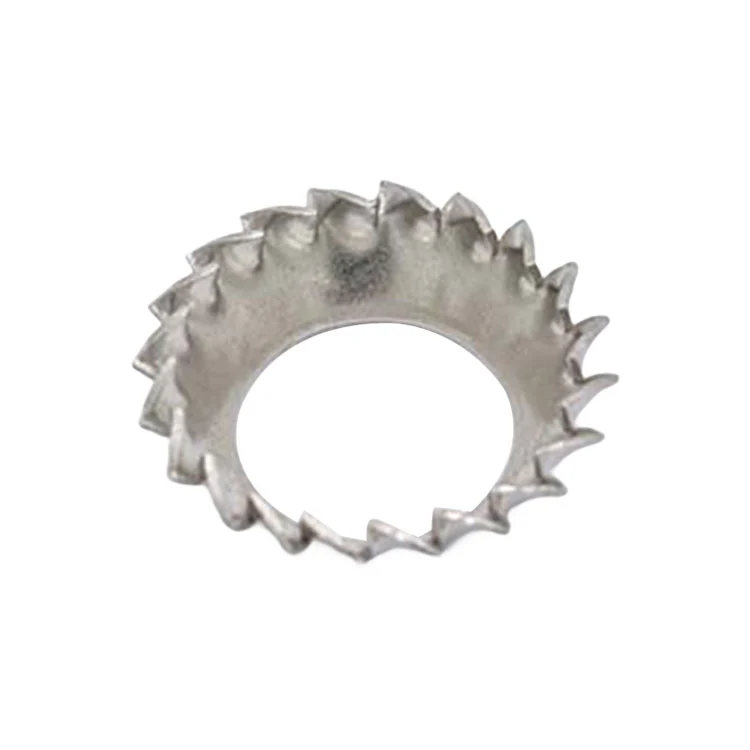
DIN 6798V Conical External Serrated Lock Washers are specialized fastening components that combine a dished, spring-like profile with teeth around the outer circumference. Unlike an ordinary flat washer, the conical body can deform elastically when compressed, while the serrations provide localized mechanical engagement with adjoining surfaces.
The designation DIN 6798V identifies a particular form of serrated lock washer. The V form is commonly associated with a conical configuration suitable for compatible countersunk fastening arrangements. However, the screw-head angle, bearing geometry, and seating dimensions must be checked before installation.
The main functional features include:
These washers are not a universal solution for every bolted connection. Their suitability depends on the joint design, contact surfaces, tightening conditions, vibration profile, and required service life.
The performance of DIN 6798V Conical External Serrated Lock Washers comes from the interaction between two features: the conical spring section and the external teeth. Each contributes differently to the fastening system.
When the fastener is tightened, the conical section compresses toward a flatter shape. Within its intended elastic working range, the washer can store energy and recover part of its deformation when the clamping condition changes slightly. This behavior can help accommodate minor settling in an assembly.
The teeth around the outer edge engage with the fastener-side and mating contact surfaces, depending on the installation arrangement. This engagement helps resist relative rotation. Its effectiveness depends on factors such as surface hardness, coating thickness, contact pressure, and the amount of tooth penetration.
In suitable applications, the combined features can help maintain fastening performance when minor movement occurs. Nevertheless, no serrated washer should be assumed to prevent loosening under every vibration condition. Severe dynamic loading, inadequate preload, unsuitable contact materials, or incorrect tightening can still compromise a joint.
For critical assemblies, evaluate the complete fastening system through engineering calculations and application-specific testing rather than relying on the washer alone.
Choosing the correct washer begins with dimensional compatibility. Buyers should confirm the nominal thread size, inner diameter, outer diameter, thickness, and minimum tooth count. The following table provides representative DIN 6798V dimensional data for commonly used metric sizes.
| Nominal Thread | Inner Diameter (mm) | Outer Diameter (mm) | Thickness (mm) | Minimum Teeth |
|---|---|---|---|---|
| M3 | 3.2–3.38 | 6.0 | 0.20 | 12 |
| M4 | 4.3–4.48 | 8.0 | 0.25 | 14 |
| M5 | 5.3–5.48 | 9.8 | 0.30 | 14 |
| M6 | 6.4–6.62 | 11.8 | 0.40 | 16 |
| M8 | 8.4–8.62 | 15.3 | 0.40 | 18 |
| M10 | 10.5–10.77 | 19.0 | 0.50 | 20 |
| M12 | 13.0–13.27 | 23.0 | 0.50 | 26 |
| M14 | 15.0–15.27 | 26.2 | 0.60 | 28 |
| M16 | 17.0–17.27 | 30.2 | 0.60 | 30 |
Note: Dimensions are representative reference values in millimeters. Confirm the applicable drawing, dimensional tolerances, conical profile, and current supplier specification before placing an order.
Beyond nominal size, procurement teams should clarify the required material, hardness where applicable, surface treatment, packaging, and inspection requirements. For a customized fastening point, a technical drawing or sample can help prevent dimensional mismatches during assembly.
Material selection affects corrosion resistance, mechanical behavior, service life, and cost. Zhenhua lists AISI 304 (A2) stainless steel, AISI 316 (A4) stainless steel, and 65Mn spring steel for its DIN 6798V product range.
| Material | Key Characteristics | Typical Selection Considerations |
|---|---|---|
| AISI 304 (A2) | General-purpose stainless steel with useful corrosion resistance | Indoor machinery, equipment housings, and general industrial assemblies |
| AISI 316 (A4) | Improved resistance to chloride-related corrosion compared with 304 in many environments | Marine equipment, humid locations, and applications involving frequent washdown |
| 65Mn | Spring steel used where suitable mechanical and elastic properties are required | Applications requiring spring characteristics, subject to the specified treatment and environment |
Available surface treatments may include plain stainless steel, polished or passivated finishes, trivalent blue-white zinc plating, black oxide, phosphating, and Eco Dacromet for applicable materials.
When choosing a finish, consider the entire assembly. A coating that protects the washer may also affect electrical conductivity, tooth engagement, dimensional clearance, and galvanic compatibility. For outdoor or corrosive service, specify the expected exposure conditions instead of selecting a coating based on appearance alone.
DIN 6798V Conical External Serrated Lock Washers can be considered for industrial joints where serrated engagement and elastic compensation are both relevant. Their suitability must be confirmed against the requirements of each assembly.
Application suitability should not be determined by industry name alone. Safety-critical joints, high-temperature systems, and assemblies exposed to severe vibration require specific engineering validation and may need additional locking measures.
DIN 6798V and DIN 6798A are both associated with external serrated lock washers, but their body geometry differs. This difference affects how each washer behaves under compression and how it should be selected for a fastening application.
| Comparison Point | DIN 6798V | DIN 6798A |
|---|---|---|
| Body profile | Conical | Flat |
| Tooth position | External | External |
| Elastic behavior | Conical deformation provides spring action | Does not provide the same conical spring behavior |
| Primary selection factor | Need for serrated engagement plus elastic compensation | Need for a conventional flat external-tooth washer |
| Installation space | Requires suitable clearance for its profile and seating arrangement | Requires suitable clearance for its outer diameter and teeth |
Choose DIN 6798V when its conical spring behavior is appropriate for the joint design. DIN 6798A may be sufficient when a flat external serrated washer meets the requirement. Neither type is automatically superior in every application; selection should follow the fastening specification and verified performance needs.
Even a correctly manufactured lock washer can perform poorly if the installation geometry or tightening procedure is unsuitable. Before assembly, check the following points:
For joints exposed to severe vibration or safety-critical loading, consult the responsible engineer and validate the complete fastening arrangement. A washer should not replace a required locking nut, adhesive, or other engineered retention method.
Consistent dimensions and forming quality are essential for conical serrated washers. The inner diameter must fit the fastener, the outer diameter must provide adequate clearance, and the conical profile must remain consistent enough to meet the specified assembly requirements.
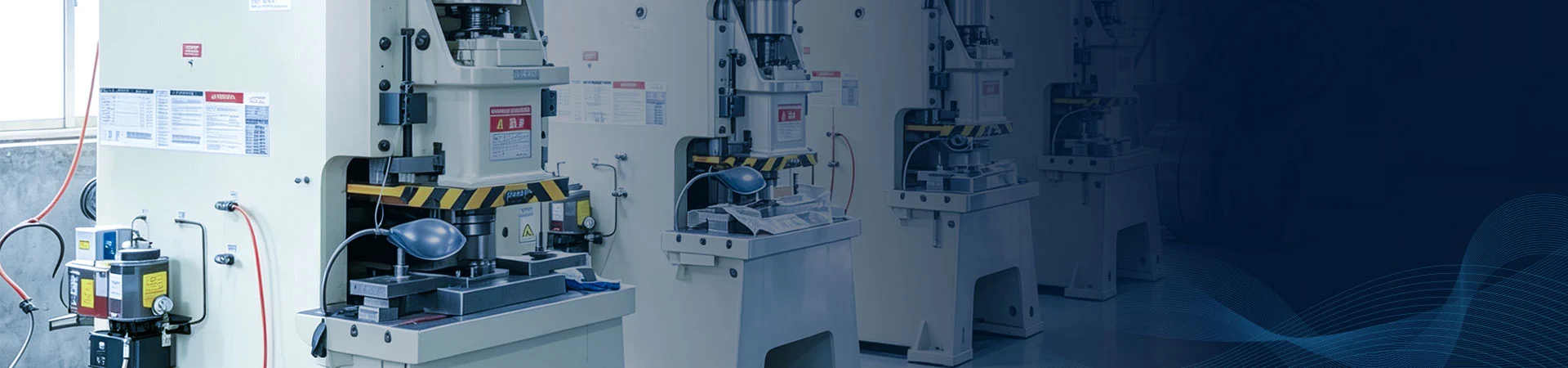
Zhenhua, Ningbo Yinzhou Zhenhua Stamping Co., Ltd., provides stamping, progressive die production, tooling development, and machining capabilities. Its DIN 6798V product range supports standard dimensions and customized production based on customer drawings or samples. The company identifies IATF 16949 as its quality management system.
When evaluating a supplier, request information relevant to your application, including:
These checks help purchasing and engineering teams assess whether the supplied washers meet the agreed specification. For non-standard parts, a drawing review and sample evaluation before mass production can reduce the risk of fit or performance issues.
They combine external serrations for mechanical engagement with a conical profile that provides elastic deformation. They are used in suitable bolted joints where both characteristics are beneficial.
DIN 6798V has a conical body, while DIN 6798A has a flat body. The conical form provides a spring-like response that may be useful when the joint requires elastic compensation.
Zhenhua lists AISI 304 (A2), AISI 316 (A4), and 65Mn. The appropriate choice depends on corrosion exposure, mechanical requirements, surface treatment, and operating conditions.
They can be considered for selected vibration-exposed joints, but suitability depends on the assembly design, preload, fastener type, contact materials, and vibration severity. Critical applications should be validated through engineering assessment or testing.
Yes. Zhenhua can review customer drawings or samples for non-standard dimensions, conical geometry, tooth configuration, materials, and surface finishes. Final feasibility depends on the requested specification and manufacturing requirements.
Start with the nominal thread size, then verify the inner and outer diameters, thickness, conical profile, tooth count, and mating screw-head geometry. Confirm the final dimensions against the applicable technical drawing.
For critical joints, replacement is generally recommended because removal can alter the serrations or conical profile. Follow the application specification and the supplier's reuse guidance.
Provide the nominal size, required quantity, material, surface finish, dimensional drawing if available, operating environment, and packaging requirements. A sample or assembly drawing is particularly useful for customized orders.
DIN 6798V Conical External Serrated Lock Washers offer a combination of serrated mechanical engagement and conical spring action for fastening applications that require carefully selected locking support. Their performance depends on dimensional compatibility, material properties, surface conditions, correct tightening, and the demands of the complete joint. Comparing the V form with flat external serrated alternatives helps engineers and purchasing teams make decisions based on actual application requirements rather than product labels alone.
Whether you need standard metric sizes or a customized washer for an OEM assembly, Zhenhua can help you review dimensions, materials, surface treatments, and production requirements. Visit the DIN 6798V Conical External Serrated Lock Washers product page to learn more about the available options. Share your drawings, target specifications, and order quantity with our team, and contact us to discuss a suitable fastening solution for your project.
✅ Get free sample!! Contact us today
✅ We will contact you within 24 hours