In modern industrial fastening systems, maintaining a secure connection under vibration, shock, and repeated mechanical loading is essential for equipment reliability. Zhenhua specializes in manufacturing customized Special Tooth Lock Washers designed to provide dependable mechanical locking performance for different assembly requirements. Available in AISI 304, AISI 316, and 65Mn materials, these washers feature customized internal, external, double-row, and conical tooth configurations. By combining precision stamping technology with application-specific engineering, manufacturers can obtain fastening components that fit their assemblies accurately while helping reduce the risk of unwanted loosening.
Special Tooth Lock Washers are mechanical fastening components designed to improve joint security through specially formed teeth that engage with the fastener and mating surface. Unlike conventional flat washers, their locking performance depends on tooth orientation, geometry, material properties, and installation conditions. This article explores their working principles, different structural configurations, material options, customization possibilities, and manufacturing considerations. It also explains how OEM buyers can select suitable washers and cooperate with experienced manufacturers to achieve consistent quality in industrial applications.
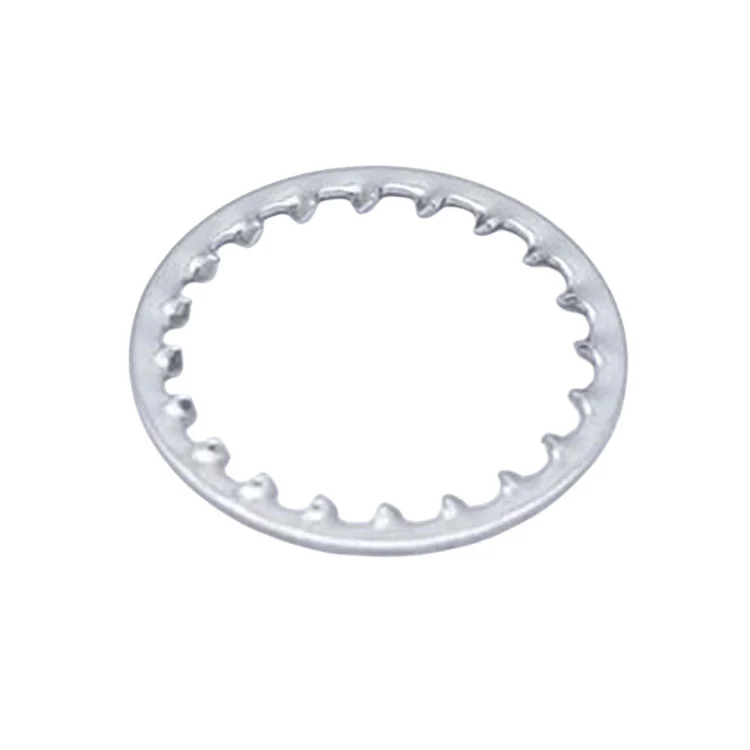
Special Tooth Lock Washers are engineered fastening accessories featuring specially designed teeth around their inner or outer edges. These teeth create mechanical engagement during tightening, helping prevent unwanted movement between connected components.
Compared with ordinary flat washers, tooth lock washers provide an additional mechanical locking mechanism. When the fastener is tightened, the teeth engage with the underside of the bolt head or nut and the corresponding mating surface. This engagement helps resist loosening caused by vibration, impact, and dynamic operating conditions.
One important characteristic of special tooth lock washers is their design flexibility. Instead of being restricted to standardized dimensions, they can be manufactured according to customer drawings, physical samples, or specific assembly requirements.
Typical product characteristics include:
These characteristics make customized tooth lock washers suitable for assemblies where standard DIN washers cannot fully satisfy dimensional, structural, or installation requirements.
The primary function of a tooth lock washer is to create mechanical resistance against fastener loosening. Its working principle relies on the engagement between specially formed teeth and adjacent contact surfaces.
During installation, the fastener applies compression to the washer. As tightening continues, the tooth tips engage with the underside of the fastener head or nut and the mating surface. This creates additional resistance to rotational movement.
For applications requiring additional elastic movement, conical tooth lock washers combine mechanical tooth engagement with the spring characteristics of a dished washer body.
However, the actual performance depends on the complete fastening system. Engineers should evaluate the bolt, nut, washer, mating materials, and operating conditions together rather than assuming that every tooth washer provides identical anti-loosening performance.
Choosing the correct tooth configuration is essential when developing customized fastening components. Different structures provide different engagement positions and installation characteristics.
Internal tooth lock washers feature teeth positioned around the inner circumference. The teeth extend toward the center opening and engage beneath the bolt head or nut.
This design is particularly useful when the surrounding installation space is limited or when an unobstructed outer diameter is required.
External tooth designs have teeth extending outward from the washer's external circumference. They provide engagement around the outside edge and can be considered when sufficient clearance is available around the fastener.
These washers are commonly evaluated for assemblies requiring a specific external locking profile.
Double-row configurations incorporate both internal and external tooth areas into a single washer. This structure can be customized when the fastening system requires engagement at different contact regions.
The tooth count, arrangement, and geometry should be determined according to the fastener dimensions and mating surface characteristics.
Conical tooth lock washers feature a dished or spring-shaped body. In addition to mechanical tooth engagement, the conical structure provides elastic movement that can accommodate certain dimensional changes within the joint.
This configuration is worth evaluating for assemblies where additional spring travel or compensation characteristics are required.
Comparison of Different Tooth Configurations:
| Washer Type | Structural Characteristics | Primary Design Consideration | Typical Application Requirement |
|---|---|---|---|
| Internal Tooth | Teeth positioned around the inner circumference | Limited external installation space | Compact fastening assemblies |
| External Tooth | Teeth positioned around the outer circumference | Available external clearance | Assemblies requiring external tooth engagement |
| Double-Row Tooth | Both internal and external teeth | Multiple engagement areas | Specialized mechanical connections |
| Conical Tooth | Dished body with tooth engagement | Elastic movement and spring characteristics | Assemblies requiring additional spring travel |
Material selection directly influences corrosion resistance, hardness, forming behavior, and mechanical characteristics. Zhenhua offers several material options for manufacturing customized tooth lock washers.
AISI 304 stainless steel is a practical choice for general industrial fastening applications. It offers useful corrosion resistance, good formability, and dimensional stability.
Typical applications include:
AISI 316 stainless steel provides improved resistance to chloride-containing environments compared with conventional 304 stainless steel. It is often selected for applications involving marine exposure, chemicals, or frequent washing.
Its corrosion resistance makes it a suitable candidate for demanding industrial environments where material durability is an important consideration.
65Mn is a manganese spring steel commonly considered when hardness, spring characteristics, and mechanical loading are important design requirements.
It can be used for specially formed washers where the tooth structure and material properties must work together to achieve the required engagement behavior.
Material Comparison:
| Material | Main Characteristics | Recommended Environment | Important Consideration |
|---|---|---|---|
| AISI 304 (A2) | General corrosion resistance and good formability | General industrial environments | Balance between corrosion resistance and manufacturing requirements |
| AISI 316 (A4) | Enhanced chloride and chemical corrosion resistance | Marine, chemical, and washing environments | Suitable for more demanding corrosion conditions |
| 65Mn | Hardness and spring characteristics | Mechanical applications requiring spring properties | Hardness, heat treatment, and surface protection requirements |
The final material should be selected according to the assembly environment, required mechanical properties, tooth geometry, and applicable specifications.
Standard washers do not always meet the dimensional and functional requirements of specialized mechanical assemblies. Custom Special Tooth Lock Washers offer greater flexibility for OEM manufacturers, equipment producers, and replacement-part suppliers.
Zhenhua manufactures customized washers according to customer drawings or physical samples. The main parameters that can be adjusted include:
For projects involving discontinued components or non-standard fastening systems, customers can also provide an existing washer as a physical reference. Engineering evaluation can then establish the critical dimensions and tooth geometry before tooling development.
This customization approach helps customers maintain existing assembly structures without necessarily redesigning the entire fastening system.
Producing high-quality Special Tooth Lock Washers requires more than simply cutting metal into a circular shape. Tooth formation, dimensional accuracy, material behavior, and tooling consistency all influence the final product.
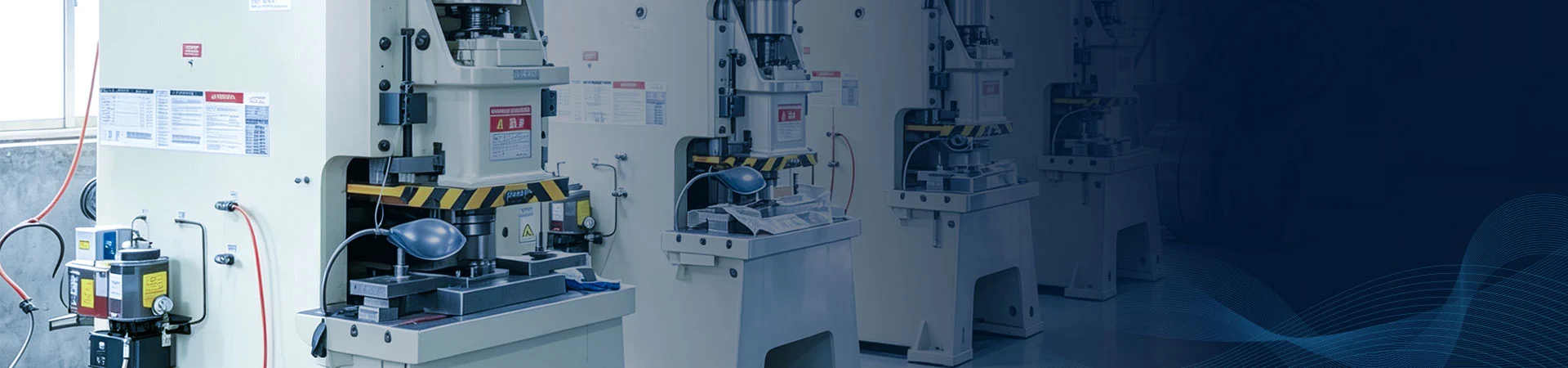
Ningbo Yinzhou Zhenhua Stamping Co., Ltd. has specialized in stamping parts manufacturing since 1993. Its manufacturing capabilities include stamping, progressive die production, machining, and in-house tooling design and maintenance.
A typical customized production workflow includes the following stages:
When selecting a custom washer supplier, buyers should consider both production capacity and quality management capabilities.
These manufacturing resources support the development of customized components from prototype evaluation through repeat production. For OEM projects, documenting approved dimensions, material specifications, and production requirements is particularly important for maintaining consistency between batches.
Special Tooth Lock Washers can be considered for various industrial fastening applications where conventional washers do not provide the required geometry or installation fit.
Potential application areas include:
The actual suitability of a tooth lock washer depends on the joint design, substrate hardness, tightening conditions, and operating environment. Application-specific testing is recommended for critical fastening systems.
Selecting the right washer requires a clear understanding of the fastening assembly rather than relying solely on product names or nominal dimensions.
1. Identify the Fastener Specifications
Determine the bolt or screw diameter, fastener head dimensions, and available installation space. These details help establish the appropriate washer inner and outer diameters.
2. Define the Required Tooth Configuration
Decide whether internal, external, double-row, or conical tooth structures are appropriate. Consider the intended engagement position and surrounding component geometry.
3. Select the Appropriate Material
Evaluate corrosion exposure, mechanical loading, hardness requirements, and spring characteristics before selecting AISI 304, AISI 316, or 65Mn.
4. Confirm Surface Treatment
Depending on the base material, available finishes may include plain, polished, or passivated stainless steel surfaces, as well as trivalent blue-white zinc, black oxide, phosphating, and Eco Dacromet coatings for suitable carbon or spring steel components.
5. Evaluate Production and Inspection Requirements
For OEM purchasing, confirm sample approval procedures, dimensional tolerances, batch inspection requirements, packaging, minimum order quantities, and delivery expectations.
To improve quotation accuracy and shorten the engineering confirmation process, buyers should prepare:
For projects where no technical drawing is available, supplying an original washer or the corresponding mating components can help the manufacturer evaluate the design.
Special Tooth Lock Washers feature specially formed teeth that engage with the fastener and mating surface during tightening. This mechanical engagement helps resist rotational loosening under vibration and dynamic loading. Ordinary flat washers primarily distribute the bearing load and do not provide the same tooth-based locking mechanism.
Yes. Customized washers can be manufactured according to customer drawings, samples, or confirmed technical specifications. Parameters such as inside diameter, outside diameter, thickness, tooth quantity, tooth height, and tooth profile can be adjusted to meet specific assembly requirements.
Common material options include AISI 304 (A2), AISI 316 (A4), and 65Mn. AISI 304 is suitable for general industrial applications, AISI 316 is often selected for more demanding corrosion environments, and 65Mn is considered when hardness and spring properties are important.
A customized washer can be developed when standard DIN 6797 or DIN 6798 dimensions and tooth configurations do not satisfy the actual assembly requirements. However, buyers should verify the fastener head, mating surface, installation clearance, dimensions, and required locking behavior before confirming replacement compatibility.
Yes. An existing physical washer can serve as a reference for dimensional inspection and tooth geometry evaluation. If the original washer is unavailable, a mating bolt, screw, or assembly drawing may help establish the required specifications before production development.
For stainless steel products, plain, polished, and passivated finishes can be considered. For suitable carbon steel and spring steel products, options may include trivalent blue-white zinc, black oxide, phosphating, and Eco Dacromet. The final coating should be selected according to corrosion requirements and dimensional considerations.
Buyers should ideally provide a product drawing or sample, required material, washer dimensions, tooth configuration, surface finish, estimated quantity, and application information. These details allow the manufacturer to evaluate production feasibility, tooling requirements, pricing, and lead time more accurately.
Special Tooth Lock Washers play an important role in fastening systems that require additional mechanical resistance against loosening. Their performance depends on the combination of tooth geometry, material properties, dimensional accuracy, and installation conditions. By choosing the appropriate internal, external, double-row, or conical design, manufacturers can develop fastening components that better match specific industrial assembly requirements.
For OEM manufacturers, equipment producers, and industrial component distributors, working with an experienced stamping supplier is essential for turning customized drawings or existing samples into consistent production parts. With established manufacturing experience, in-house tooling capabilities, multiple material options, and application-oriented customization services, Zhenhua provides manufacturing support for different special washer requirements. If you are looking for reliable customized Special Tooth Lock Washers, send your technical drawings, product samples, or detailed specifications to Zhenhua. Contact us today to discuss your project, request a customized quotation, and find a suitable fastening solution for your industrial applications.
✅ Get free sample!! Contact us today
✅ We will contact you within 24 hours