
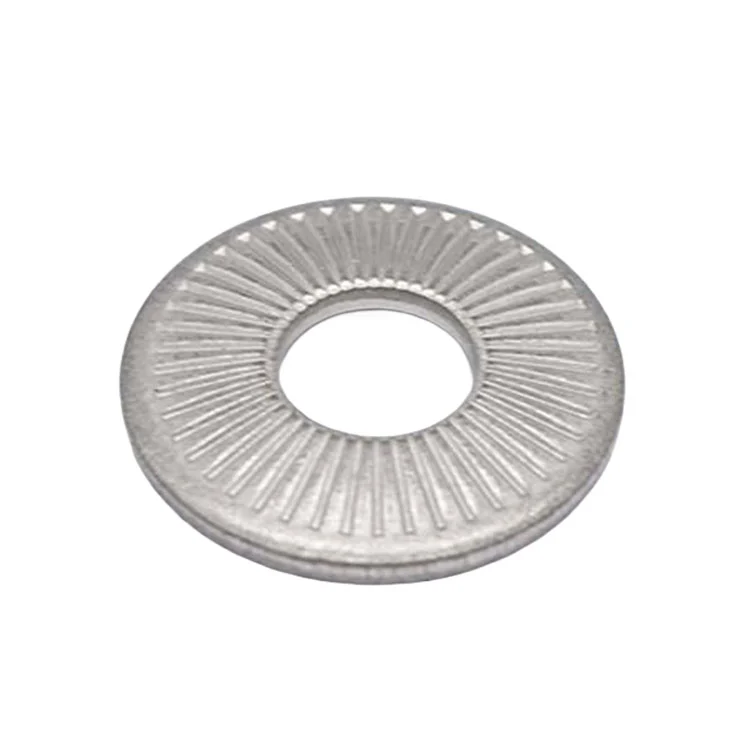
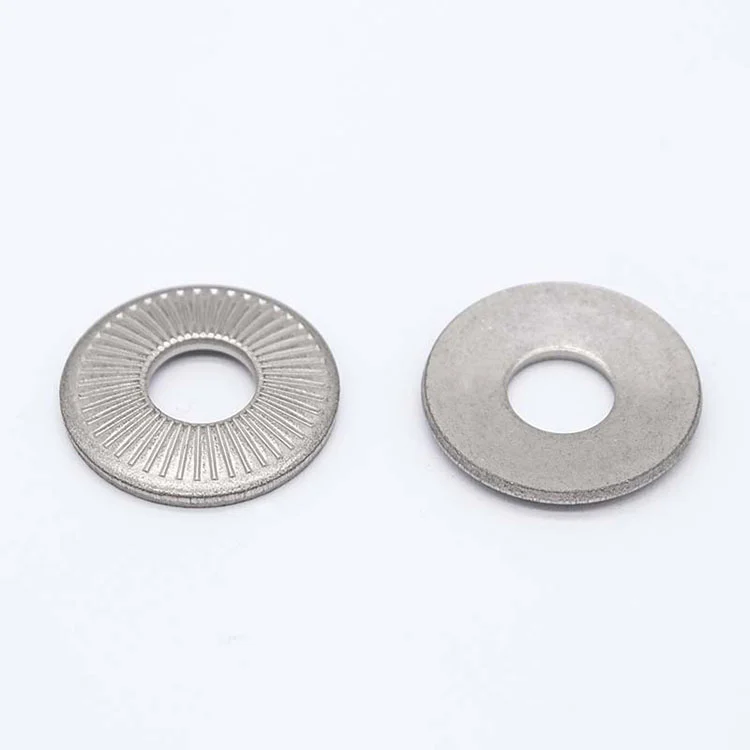
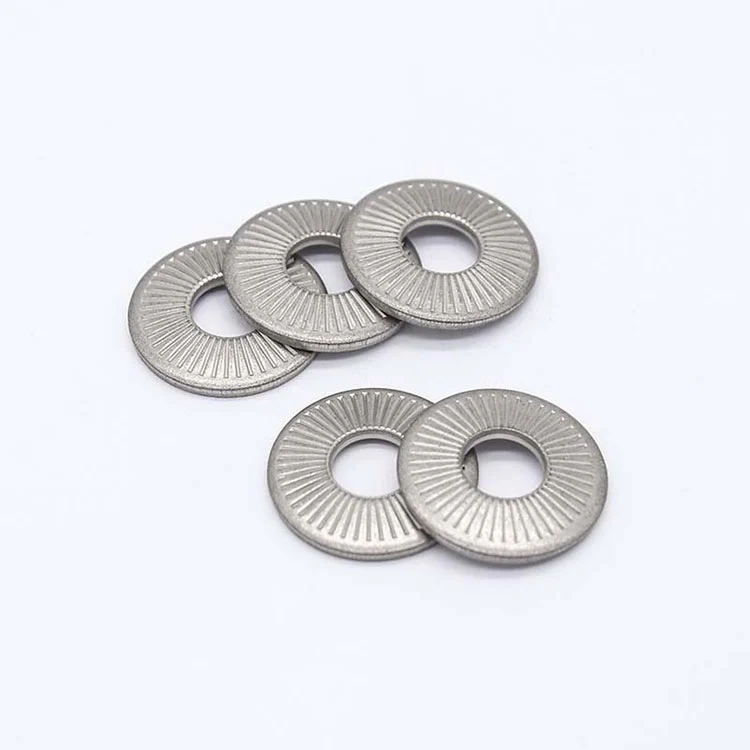
Spring preload + tooth-bite dual locking | L large series, wide bearing area | OEM/ODM
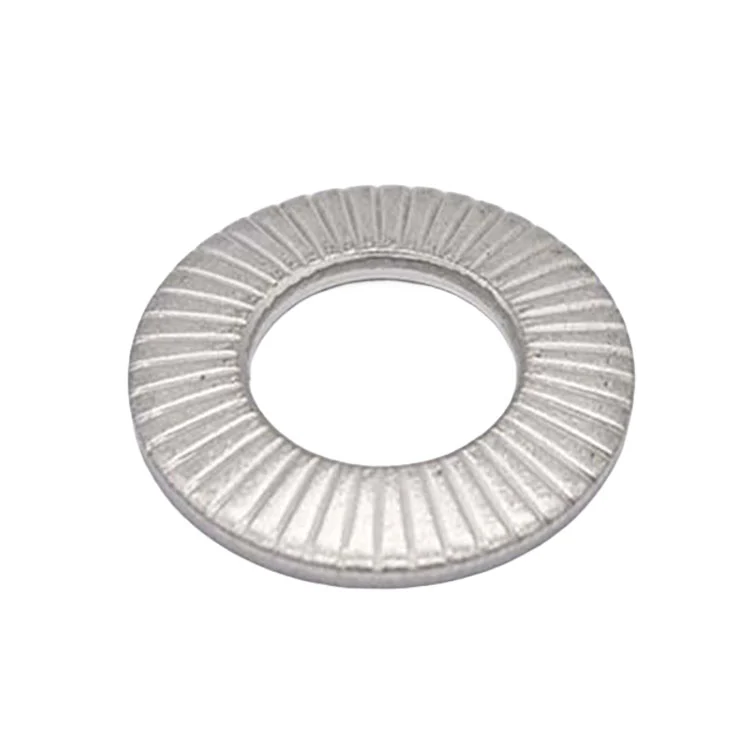
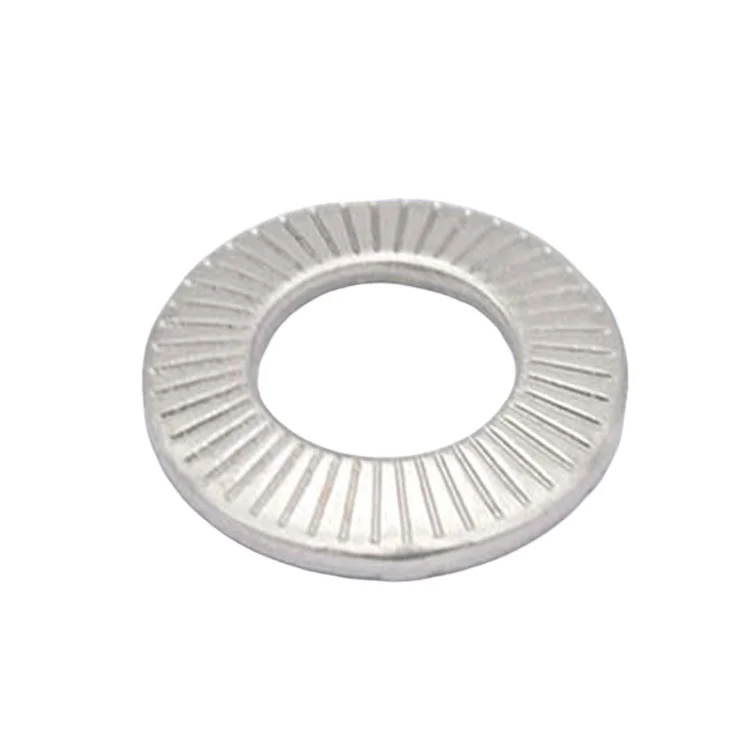
NFE 25-511 L type serrated conical lock washers in AISI 304, AISI 316 and 65Mn; large-series design provides wider load distribution, while conical spring action and radial serrations work together for vibration-resistant fastening. Custom sizes, finishes and OEM production available.
Stamping parts manufacturer
Owned factory
Stamping capacity · 120 presses up to 450 T
Quotation response
|
|
|||||||||||||||||||||||||||||||||||||||||
|
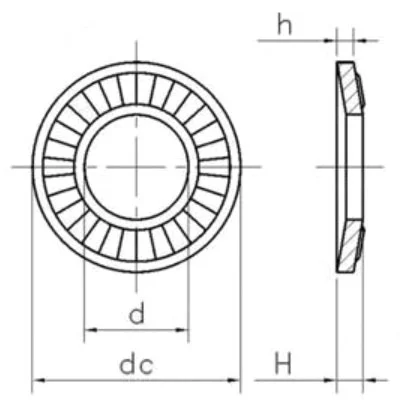
For non-standard dimensions, customers can provide a drawing, sample or application requirement for review. The production team can then confirm whether the required geometry can be formed with the specified material and thickness.
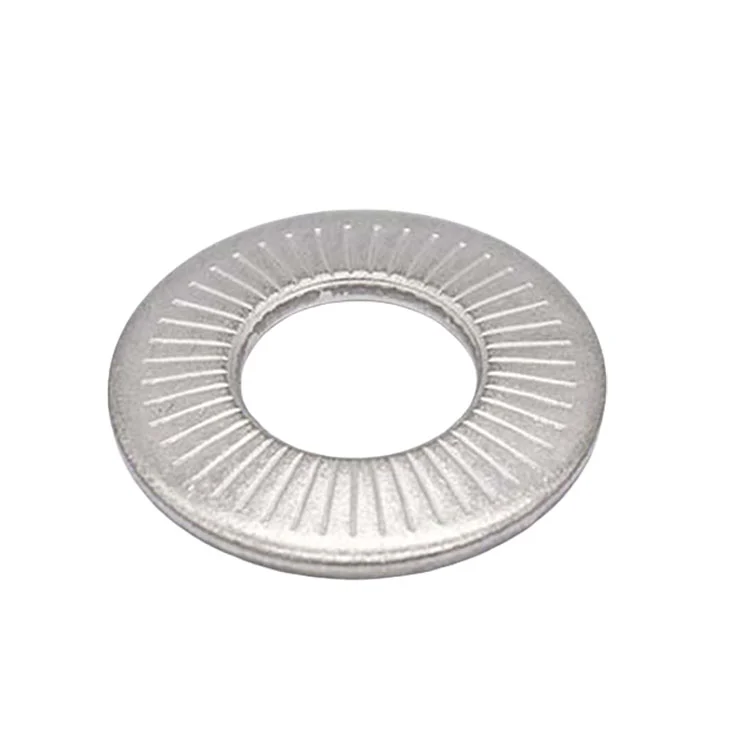
NFE 25-511 L Type Serrated Conical Lock Washers are the large-series serrated conical lock washers of the French standard NF E 25-511: one face carries radial sun-ray serrations while the other is a smooth conical surface. During tightening, the conical face compresses to generate elastic preload while the serrated teeth bite into the bolt head/nut and the workpiece - a dual anti-loosening action of spring preload plus tooth engagement. As the widest series, the L type offers the largest bearing area and higher load capacity than the narrow (N) and medium (M) series.
The L type of NFE 25-511 is not simply a larger version of a conventional spring washer. Its larger outside diameter changes how the clamping load is transferred into the joint.
When the washer is compressed during tightening, its conical section provides elastic displacement. At the same time, the serrated contact surface engages with the mating components. The larger bearing diameter of the L series distributes the applied load over a wider area, which becomes useful when the joint surface is relatively thin, has a larger bolt head or requires greater bearing coverage.
This makes the L series particularly relevant to structural and mechanical joints where three factors need to be considered together:
clamp-load retention + tooth engagement + bearing-area distribution.
The washer should therefore be selected according to the bolt head or nut diameter, available seating area, joint material and required spring characteristics rather than by nominal thread size alone.
Ningbo Yinzhou Zhenhua manufactures NFE 25-511 L type washers in stainless steel and spring-steel grades, with dimensions, material and surface condition confirmed against the customer's application or drawing.
The main engineering advantage of the L series comes from its larger bearing footprint.
A conventional washer may have sufficient contact area for a compact steel joint, but the same arrangement can become less suitable when the clamped component is thinner or has a relatively large seating requirement. Increasing the washer's bearing diameter spreads the compressive load over a broader region and reduces the tendency toward excessive local contact pressure.
The conical profile adds another function. Instead of behaving as a completely flat spacer, the washer deflects during tightening and provides elastic recovery when the joint experiences small changes caused by vibration, thermal cycling or material settling.
The serrations contribute a separate mechanical effect. Once the joint is tightened, the teeth engage with the mating surfaces rather than relying only on friction between smooth washer faces.
This combination is what makes the NFE 25-511 L series different from a plain flat washer or a conventional conical spring washer.
The NFE 25-511 family is available in different outside-diameter series. The choice should be based on the available seating surface and load distribution requirement, not simply on the bolt thread.
|
|
||||||||
|
For an L-type washer, confirm that the larger outside diameter does not interfere with adjacent components, welds, formed edges, slots or recessed mounting areas.
For thin or softer substrates, the larger bearing surface can be particularly important because the joint should be evaluated for local surface pressure as well as bolt preload.
The L series is most useful when the joint requires more than simple load spreading.
The washer is particularly worth considering when bolt-head diameter, substrate thickness and bearing pressure are important design variables.
It should not, however, be selected automatically for every high-vibration connection. The complete joint—including bolt grade, tightening torque, substrate hardness, washer geometry and service load—should be evaluated.
Surface treatment should be considered together with the washer material and the mating parts.
For stainless-steel versions, passivation can be specified when the component requires a cleaner and more stable passive surface after forming. Polishing may be selected where surface appearance or cleanliness is important, but it should not be treated as a substitute for corrosion-resistant material selection.
For carbon/spring-steel versions, a protective coating is normally more relevant because the base material itself does not provide stainless-level corrosion resistance.
For toothed washers, the coating process also matters because excessive coating buildup can change tooth engagement and dimensional relationships. For demanding applications, the coating specification should therefore be confirmed together with the washer geometry rather than treated as a separate cosmetic requirement.
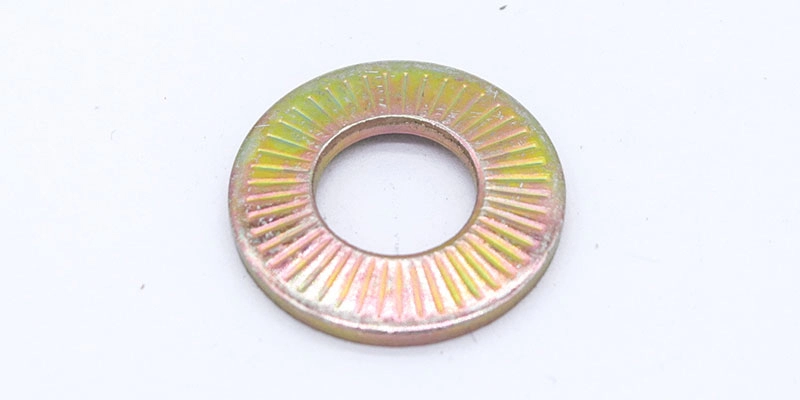
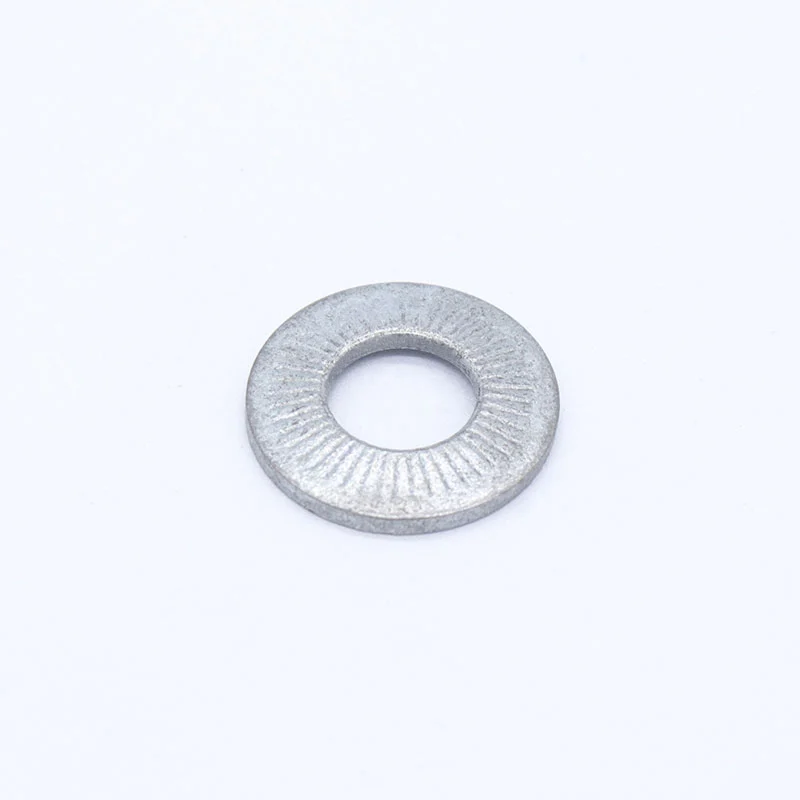
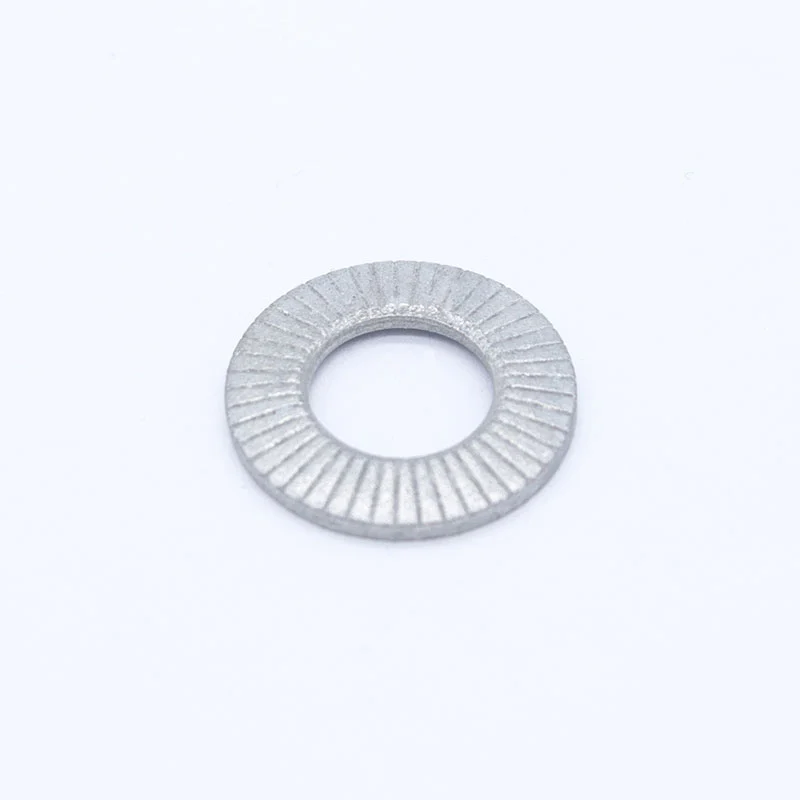
NFE 25-511 L washers combine formed spring geometry with functional serrations, so dimensional inspection alone is not enough.
The free height and formed profile determine the available elastic displacement.
Variation in thickness can influence both spring response and forming consistency.
The serrations need sufficient definition to engage the mating surface without excessive deformation during forming or finishing.
After stamping and forming, the washer should retain a consistent profile rather than showing uncontrolled distortion.
Coating or finishing must not excessively blunt the functional contact areas.
Ningbo Yinzhou Zhenhua supports tooling development, stamping and progressive-die production, with inspection records maintained through the manufacturing process under its IATF 16949 quality management system.
For OEM projects, production can proceed from drawing review → tooling/sample → dimensional verification → trial batch → mass production.
Ningbo Yinzhou Zhenhua can produce NFE 25-511 L type washers according to standard requirements or customer-specific drawings.
For a new application, engineering review is more useful when the inquiry includes the bolt size, bolt grade, mating material, expected vibration or dynamic loading, installation space and corrosion environment.
This information allows the washer geometry and material to be considered as part of the joint rather than selected independently.
The main reason is the available bearing area. The L series provides a larger outside diameter and therefore a wider load-transfer footprint. It can be advantageous where the joint surface needs greater load distribution or where the bolt head/nut requires a larger seating area. The trade-off is increased radial space, so surrounding clearance must be checked before selection.
No. Both use a conical spring geometry, but they are not simply interchangeable equivalents. NFE 25-511 incorporates serrated contact geometry, adding mechanical surface engagement to the spring action. DIN 6796 is primarily a conical spring washer standard without the same serrated locking configuration.
The installation orientation should follow the applicable NFE 25-511 configuration and the supplier's technical drawing. For serrated designs, the functional tooth side must engage the intended mating surface. Incorrect orientation can prevent the teeth from working as designed and should be avoided in production assembly.
It can be considered, but the joint should be evaluated carefully. Serrations may penetrate or damage softer substrates, while the larger bearing area can help distribute the overall clamping load. For aluminium, painted sheet and other softer materials, the washer geometry, tooth engagement and tightening torque should be reviewed together.
Not necessarily. A larger outside diameter mainly changes the load distribution and available bearing area. Anti-loosening performance also depends on tooth engagement, spring characteristics, bolt preload, joint stiffness and the operating vibration. Choosing the largest washer without checking the complete joint can create clearance or installation problems.
For accurate selection, provide the nominal bolt size, bolt grade, washer series, required quantity, material, surface treatment, mating material, drawing or sample and application environment. If the washer is used in a vibration-critical joint, operating temperature and loading conditions are also useful.
Yes. Non-standard dimensions, materials, surface finishes and selected geometric parameters can be reviewed against customer drawings or samples. Before tooling, the production team will confirm whether the requested geometry is suitable for the selected material and forming process.
For NFE 25-511 L type serrated conical lock washers, send the required size, quantity, material, surface treatment and drawing or sample. Ningbo Yinzhou Zhenhua can review the specification and confirm production feasibility, tooling requirements and lead time before order placement.
send your size, quantity and drawing for countersunk lock washers, and we will reply after confirming specifications and lead time.
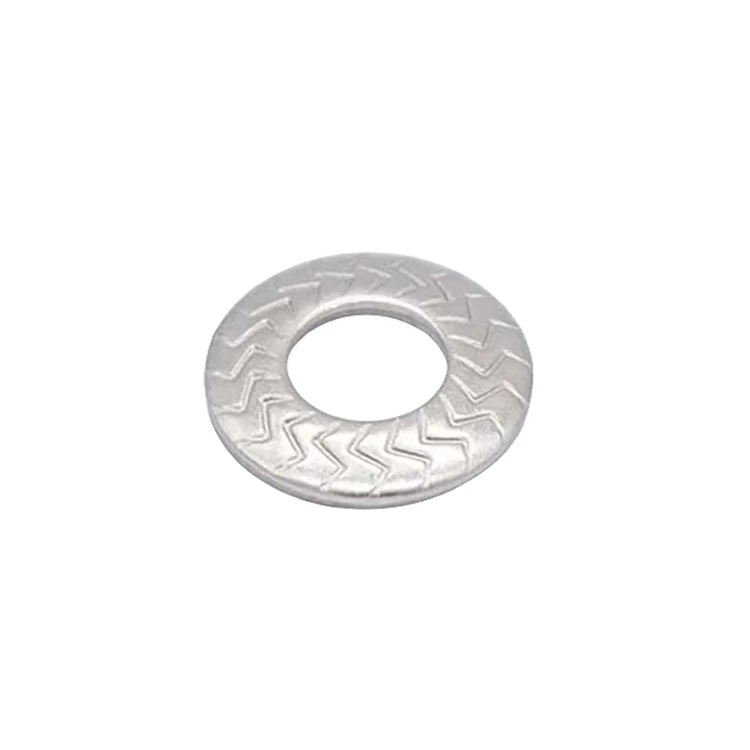
✅ Get free sample!! Contact us today
✅ We will contact you within 24 hours
