
Spring preload + tooth-bite dual locking | N narrow series, compact for confined spaces | OEM/ODM
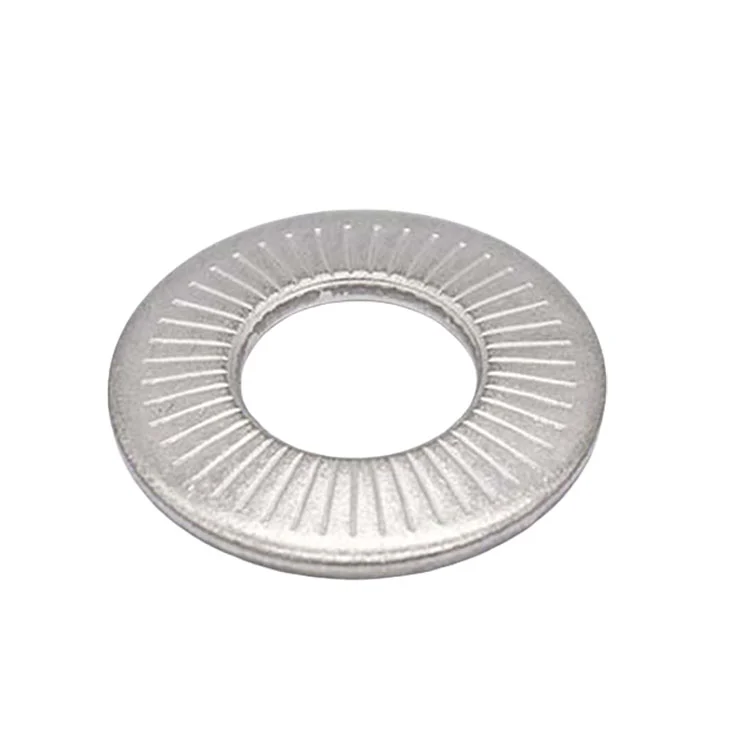
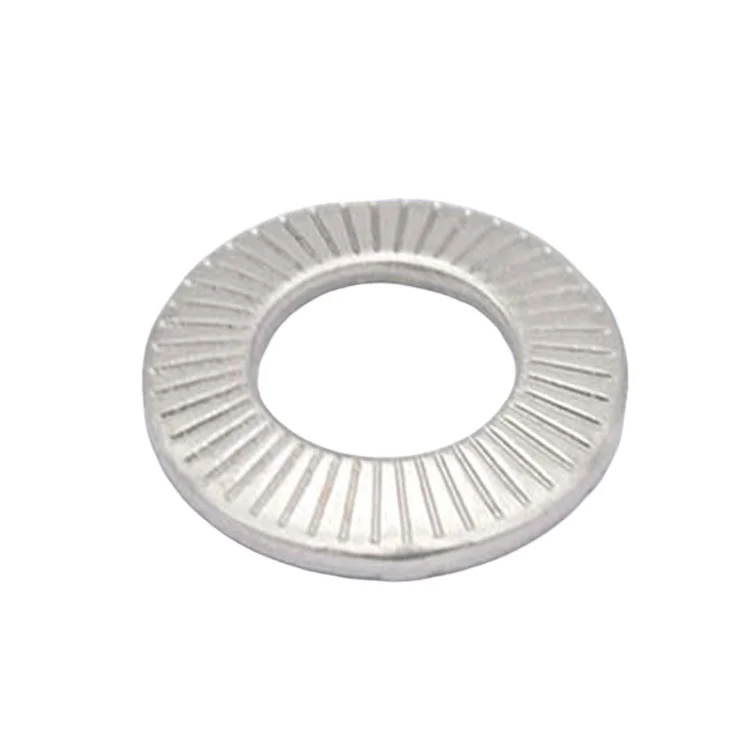
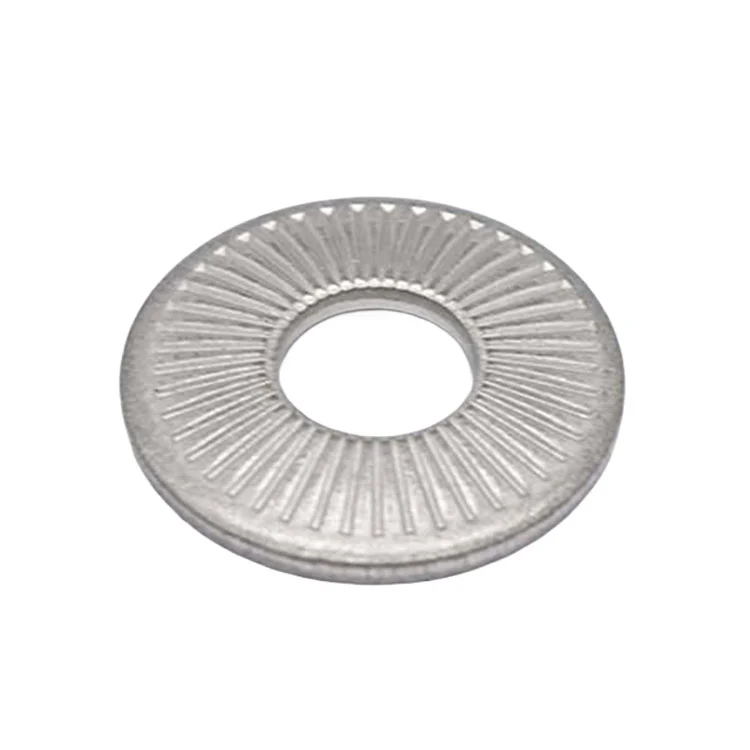
NFE 25-511 N type serrated conical lock washers: French NF E 25-511 narrow series, AISI 304/316 or 65Mn, compact outer diameter, conical spring preload plus serrated locking, OEM/ODM production and custom finishes.
Stamping parts manufacturer
Owned factory
Stamping capacity · 120 presses up to 450 T
Quotation response
|
|||||||||||||||||||||||||||||||||||||||||||||||||
|
Non-standard dimensions can be manufactured from customer drawings or samples after technical confirmation.
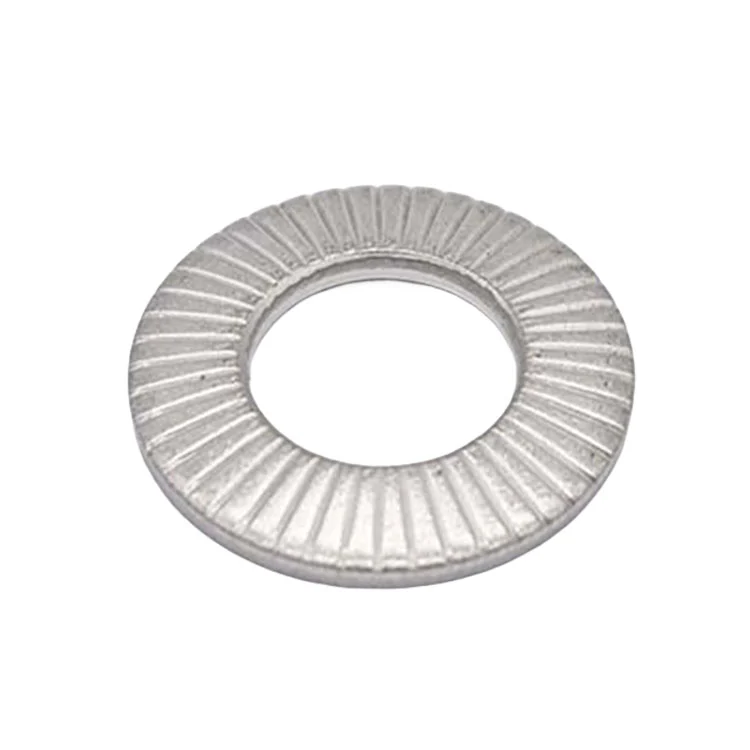
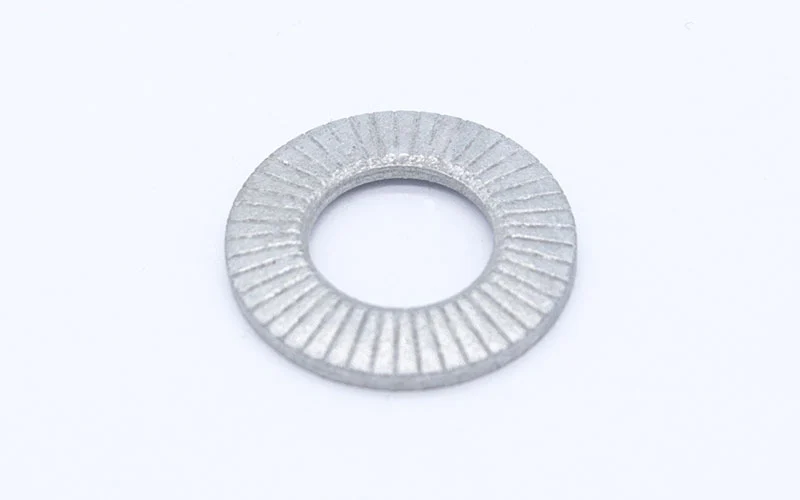
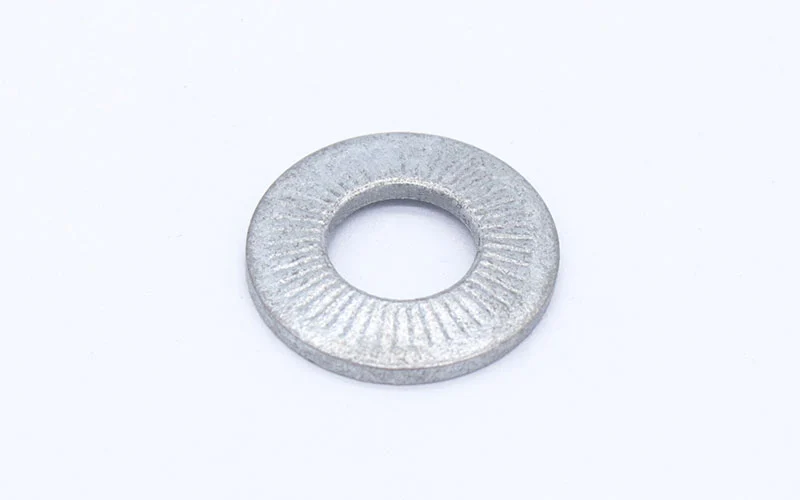
The NFE 25-511 N Type Serrated Conical Lock Washers are the narrow series of the NF E 25-511 washer family. Its defining feature is the reduced outside diameter rather than a different locking principle.
The washer has a conical section and a serrated face. During tightening, the conical section is compressed and produces an elastic reaction within the joint, while the radial teeth engage the mating surfaces.
This makes the N type useful when a conventional locking washer has sufficient axial space but cannot be accommodated because of nearby components, narrow flanges, recessed fasteners or restricted radial clearance.
The smaller outside diameter also reduces the washer's bearing footprint. Therefore, the N version should not be selected simply because it occupies less space; the available seating surface and joint load must also be suitable.
Ningbo Yinzhou Zhenhua supplies NFE 25-511 N type washers in AISI 304, AISI 316 and 65Mn for compact machinery, automotive components, electrical assemblies, automation equipment and other space-restricted fastening applications.
Three geometric characteristics determine how the washer behaves in the joint.
The narrow profile leaves more clearance around the fastener. This can be useful where another component, housing wall, bracket or flange is located close to the bolt.
The washer is not flat when installed. Tightening compresses the conical section and produces an elastic reaction force. The available spring effect depends on the washer geometry, material and degree of compression.
The teeth provide mechanical engagement with the mating surfaces. Their effectiveness depends on correct orientation, tightening and the ability of the mating materials to accept tooth penetration.
The three elements work together; reducing the outside diameter does not mean that the N version is simply a smaller flat lock washer.
|
|
||||||||
|
For the N type, check the bolt-head/nut diameter and available annular seating surface before ordering. A washer that is too small may not provide adequate surface engagement even if the nominal thread size is correct.
AISI 304 is a practical choice for general machinery, electrical equipment and ordinary indoor or outdoor applications. It combines stainless corrosion resistance with the mechanical characteristics required for formed washer production.
AISI 316 is better suited to chloride-rich or more corrosive environments, including coastal installations, salt exposure and frequent washdown.
For outdoor or marine applications, the washer, fastener and mating component should be evaluated as one fastening system rather than selecting 316 in isolation.
65Mn is suitable where the washer's spring characteristics are a major design consideration. Its mechanical condition can be specified according to the required hardness and forming performance.
>For 65Mn production, heat treatment and corrosion protection can be matched to the application rather than applying the same specification used for stainless versions.
The surface finish should be selected together with the base material.
Natural, polished or passivated surfaces can be supplied according to appearance, cleanliness and corrosion-resistance requirements. Passivation is particularly relevant after stamping and handling when a controlled stainless surface condition is required.
Zinc plating, black oxide/phosphating and zinc-flake systems can be specified according to the required corrosion protection.
Suitable for applications requiring a higher level of corrosion protection without relying on conventional electroplating. Coating requirements should be confirmed together with the applicable corrosion test specification.
Color, coating system and packaging can be specified for OEM programs where required.

The N type has a relatively small bearing footprint, so dimensional consistency is important. Variations in the formed geometry can affect how the washer seats around the fastener.
During production, the following characteristics can be controlled according to the approved specification:
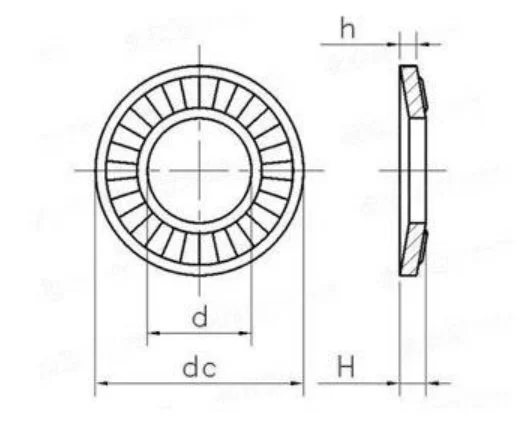
| Characteristic | Manufacturing significance |
| Inner diameter | Fastener fit |
| Outer diameter | Available bearing area and clearance |
| Material thickness | Forming and spring behavior |
| Free height | Conical geometry |
| Tooth profile | Surface engagement |
| Concentricity | Correct seating around fastener |
| Surface finish | Corrosion protection |
| Material condition | Mechanical performance |
Ningbo Yinzhou Zhenhua combines stamping, progressive die production and machining with in-house tooling development. Its IATF 16949 quality management system provides process controls for production consistency and traceability.
For applications where the standard N-series dimensions do not match the assembly, Zhenhua can develop made-to-drawing versions.
For new development, customers can provide a drawing or sample together with the bolt/nut specification and required material. Sample approval can be completed before volume production.
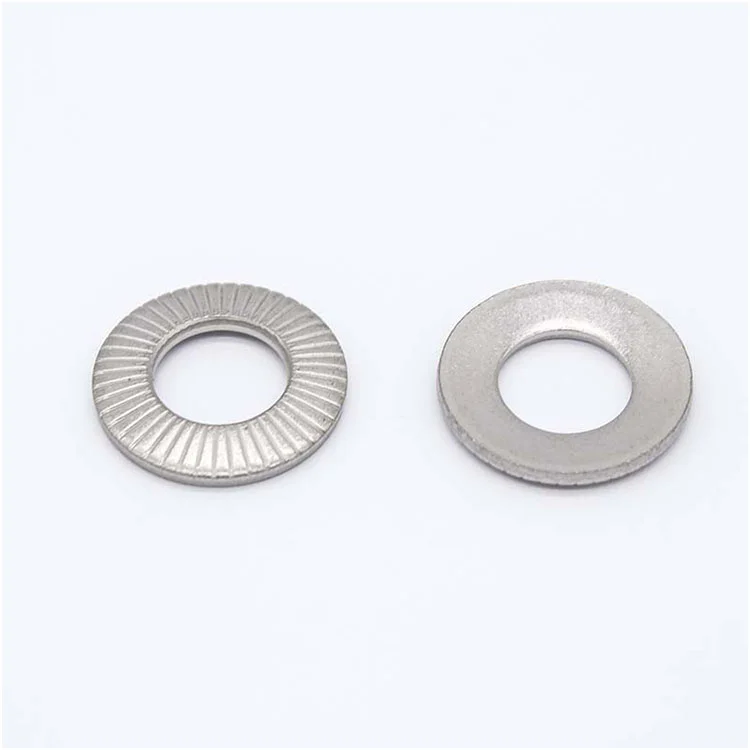
The two faces of the washer should not be treated as identical.
Serrated side → bolt head or nut
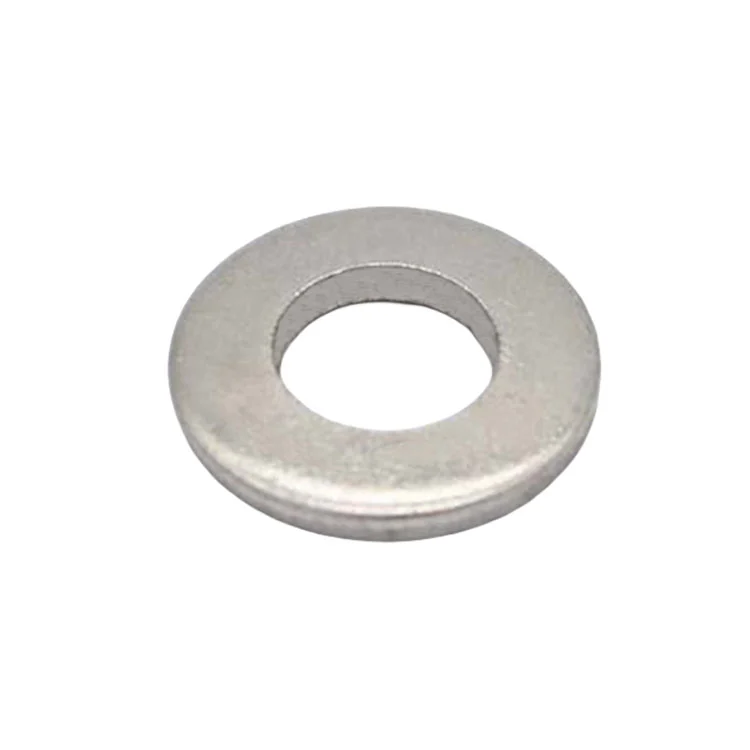
Smooth conical side → joint surface
The washer should be seated concentrically around the fastener before tightening.
The final tightening torque should come from the complete joint specification. Factors such as bolt grade, nut type, lubrication and mating material can affect the resulting preload and therefore should be considered during assembly validation.
The narrow N series is advantageous when radial clearance is restricted, but its smaller outside diameter also means a smaller bearing area.
Consider the M series when more bearing surface is available and a middle-range footprint is preferred.
Consider the L series when the joint requires a larger bearing footprint or uses larger fastener heads.
For softer, thin or easily deformed joint materials, the available bearing area should be checked before selecting the N version.
|
|
|||||||||||
|
The NFE 25-511 N should therefore be selected for its combination of locking mechanism and compact radial geometry, not simply as a smaller version of another lock washer.
For this NFE 25-511 N Type Serrated Conical Lock Washers, the value of a manufacturer is not only the ability to stamp a washer. The N-series geometry requires controlled forming, consistent serration dimensions and repeatable material thickness because the available bearing area is intentionally limited.
These capabilities are particularly relevant when ordering N-type washers for repeat production, where small changes in formed height, tooth profile or outside diameter can affect assembly consistency.
The N type has the narrowest radial profile in the NFE 25-511 family. It is primarily selected when installation clearance is limited. M provides a medium footprint, while L provides the largest bearing area.
The locking principle remains the same: conical spring action combined with serrated engagement. However, the smaller outside diameter provides less bearing area, so the joint surface and fastener dimensions must be suitable for the N series.
Yes, provided the nut dimensions and available seating surface are compatible with the washer's inner and outer diameters.
The serrated face should normally contact the bolt head or nut, while the smooth conical face seats against the joint surface. Tighten according to the specified joint torque.
No. DIN 6796 relies on conical spring action, while NFE 25-511 N adds radial serrations for mechanical surface engagement. They have different functional designs.
AISI 316 is generally the first stainless grade to consider where chloride and salt exposure is significant. The complete fastening system should also be evaluated for corrosion compatibility.
Yes. Zinc-flake or other suitable surface treatments can be specified for 65Mn according to the required corrosion protection and application conditions.
Yes. Custom inner/outer diameters, thickness, free height, serration geometry, material and surface treatment can be produced according to approved drawings or samples.
Please provide thread size, quantity, material, surface treatment, drawing or sample and application requirements. For restricted-space applications, the available radial clearance is also useful for confirming the N-series dimensions.
send your size, quantity and drawing for countersunk lock washers, and we will reply after confirming specifications and lead time.
✅ Get free sample!! Contact us today
✅ We will contact you within 24 hours
