
The particularity of timber fastening comes from the material itself: it swells and shrinks with moisture, creeps under sustained load, and has low surface hardness so it dents easily. This means loosening in timber originates from material deformation rather than vibration - so selection logic centres on elastic compensation rather than rigid locking. Here is the part-by-part product mapping.
Beam-to-post nodes → DIN 6796 / DIN 9250 Belleville Washers
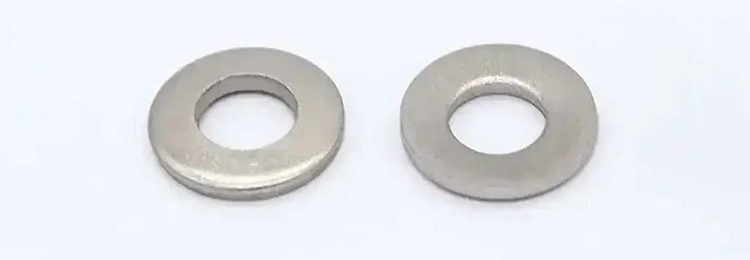
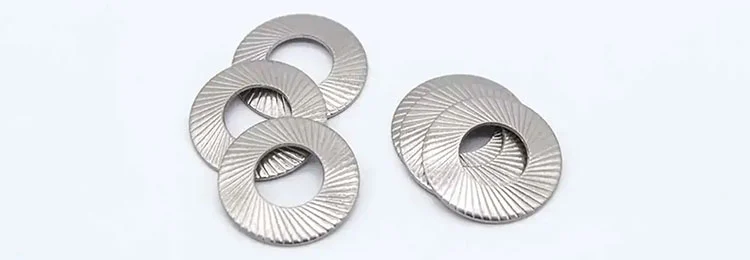
This is the most critical node in timber construction. Timber creeps under sustained load, causing bolt preload to decay over time. The solution has two steps: a widened flat washer increases bearing area and prevents timber crushing; a Belleville washer provides elastic travel to compensate displacement from moisture movement and creep.
Purlin and rafter fixing → DIN 6798A External Tooth
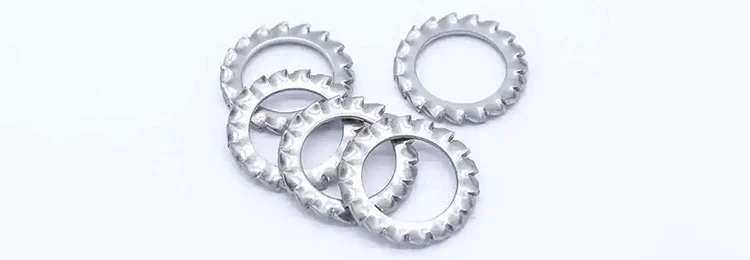
Square washers are a classic wood construction fitting - the square form fits neatly against timber member edges, commonly used for beam-to-post and purlin fixing. External tooth washers go between timber members and metal connectors to prevent the metal component loosening under displacement.
Timber-to-steel connector interfaces → DIN 6798A External Tooth

When timber connects to steel, the metal components at the interface still experience vibration. External tooth washers handle metal component locking; conical spring washers provide a larger elastic travel range for interfaces with greater movement.
Long-span and high-movement nodes → DIN 137A / DIN 137B Wave Spring Washers

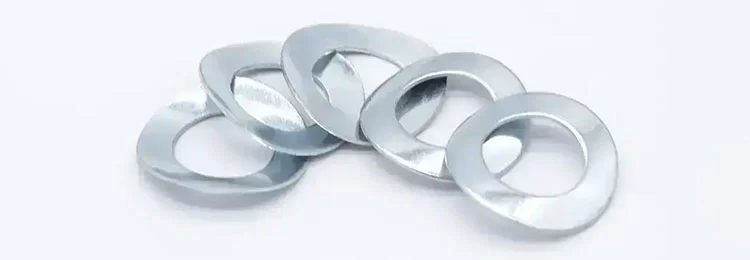
Movement from moisture content change in long-span timber beams is substantial (a one percent change in moisture content can change dimensions by 0.2 to 0.5 percent). Curved and wave washers provide sustained elasticity under light load for nodes with greater displacement.
Timber metal connectors → Custom Stamped Parts
Zhenhua produces custom stamped brackets, connecting plates, U-shaped brackets and reinforced corner supports for the wood construction industry, with dedicated tooling developed to drawing.
A common rule for washer outer diameter is no less than three times the bolt diameter to distribute pressure effectively. Hardwood allows a smaller diameter; softwood requires larger.
Tell us the timber species, service environment (indoor or outdoor), member dimensions and load conditions, and we will recommend a matching washer solution.
Get A Quote✅ Get free sample!! Contact us today
✅ We will contact you within 24 hours
